post

Cosmic Quote #47

“The problem with quotes on the Internet is that you never know if they are genuine”–Abraham Lincoln
A little nonsense now and then, is cherished by the wisest men.

A little nonsense now and then, is relished by the wisest men.

Be assured that all of the Cosmic Quotes on this site are genuine.  As in, “I have genuinely researched all of them–on the Internet.”  This one included.


post

Google This! Search Term Haiku #5

“If it isn’t on Google, it doesn’t exist.”–Jimmy Wales

 Not that it has anything to do with this post, but I have to start with something:  reading the above quote, it also occurs to me that if something is ON Google, it exists whether it wants to or not.  

OK, now down to business with another rousing rendition of Search Term Haiku, the game that asks the question, does anybody have a life?  Me? My readers? The anonymous boobs who type this drivel into search engines?

To review how this works:

  1. Every phrase must come from actual search terms that yield this blog in the results, per my WordPress stats page or Google Webmaster Tools page.
  2. The poems must follow the accepted Anglicized format of the traditional Japanese art form: three lines of 5, 7 and 5 syllables respectively.
  3. Each line must be comprised of actual search term phrases, verbatim.  The only changes allowed are punctuation and truncation and capitalization.
  4. Words may not be changed or rearranged. Typos and misspellings must not be corrected.
  5. Phrases may be combined or extended to multiple lines, as long as the previous four conditions are met.

I should point out that the use of terms from Google Webmaster tools is a new feature for episode #5,  made necessary by the fact that Google just doesn’t report many search terms to WordPress anymore.  Or to anybody else for that matter.  But webmaster tools reports oodles (meaning hundreds) of search terms in which a page turns up in, even if not clicked on, so I get to use those.  Whatever.  I don’t explain Google, I just make fun of the boobs who type dumb things into it.

So here goes nothing.

.

Cyber-stealth

On the internet

nobody knows you’re a horse

a goat and a pig.

.

Allez France

Blague sur le tennis

Pepe Le Pew girl cat name

Cest nes pas un pipe

.

Ewww

Wank definition:

Osi Umeniora poop

guy has sex with snake.

.

Voice Recognition

Letrate** sentences

paraprosdokian quotes

Siri for dummies

.

Brainiac

Explain like I’m 5.

Please register or login

Tyson I.Q. score

**Sic

post

Time Way Out: The Jug Handle State

“I believe that there’s an intelligence to the universe, with the exception of certain parts of New Jersey.”–Woody Allen

This is a summer rerun.   It’s not that I’m lazy, it’s that I’m in the midst of three days stuck in the so called “Garden State” on business, and I thought, “why shouldn’t I share the pain?”

The unintelligent part of Jersey.

The unintelligent part of Jersey.

I have spent the lion’s share of my adult life working in the pharmaceutical industry.   To be precise, I sell goods and services to pharmaceutical companies.  This is a difficult profession, for it entails enduring one of the most hair raising trials-by-fire in any known line of of work.

I have to drive in New Jersey. 

Unfortunately, due to the high concentration of  pharma companies in the so-called Garden State, I have to drive there often.  At least, I try to.  I sometimes think it would be easier to run in quicksand.  It has taken me 15 minutes, on one occasion, just to cross the street.  I have been 20 minutes late in getting to a location less than a mile away–not because there was a lot of traffic–but because I was pointed the wrong way on Route 22 and the nearest jug handle turnaround was three miles and seven traffic lights in the wrong direction.

It all started away back in the mid-1980’s.  I was driving for the first time to Sandoz in East Hanover.  As I approached my target on Route 10 from the west, there majestically high on hill to my right towered a high-rise with large block letters S-A-N-D-O-Z emblazoned across the top floor.  Brilliant!  I found it and I was on time.  I drove past an intersection, turned right into a parking lot and pulled up to a security gate to register for my sales appointment.

“Sorry sir, this is the service entrance, you need to go to the visitors center at the main gate.”

“Huh? Where’s that?”

The guard pointed to the intersection that I had just passed.  No problem, I was 10 minutes early for my appointment.   All I needed to do was pull out of the security area and turn left.  There was just one problem.  Between me and the traffic going in the other direction was something that looked like the Berlin Wall–complete with barbed wire and machine gun turrets.  It was then that I learned about jug handle turns.  You see, New Jersey has it’s own laws of physics.  In New Jersey, you have to turn right to turn left.  Understanding quantum mechanics is easy compared to understanding traffic patterns in New Jersey.

So I continued in the wrong direction on route 10 until I came to the first jug handle turn; I think this was somewhere near Bangor, Maine.  I came back to the original intersection I had missed, only to find there was no left turn allowed there, either.  This required me to go to the next jug handle, just outside of Allentown, PA.  Needless to say, I was late for my appointment.

It all boils down to this.  Other states have freeways, expressways and thruways; in New Jersey they have no-ways. Once you get on, there is no way to get off.  You have to drive to Delaware to turn around.**    There is one good thing about all of this, though. Here where I live in Connecticut, all the country roads in the woods can be confusing, particularly at night.  In a strange area it is easy to drive around in circles if you don’t have a GPS.   But in New Jersey, you don’t need a GPS to know you have gone wrong.  When you miss your turn in Jersey your whole life starts passing in front of you.   By now I have lived more lives than a cat.

**This literally did happen to me once, though it was actually in southeastern Pennsylvania, which has obviously been mapped out by the same civil engineers that designed New Jersey.  I was on a limited access connecting road and missed my exit.  In order to turn around, I had to drive six miles to the end of the connector–which was in Delaware!

post

Cosmic Quote #39

“If god had meant us to play soccer, he wouldn’t have given us arms.”–Mike Ditka

www.cartonstock.com used by permission

http://www.cartonstock.com used by permission

If god had meant us to spend this much time online, we would have been born with a modem.   Personally, soccer sort of bores me.  I can’t wait for the world cup to be over so I can go back to being bored watching baseball, tennis and golf.

post

Equations of Everyday Life #2: Inane Celebrity Memes

Summer rerun of a WordPress.com “Freshly Pressed” post.   New content coming soon.

“You’re not famous until my mother has heard of you”–Jay Leno 

(Jay Leno graduated from Emerson College the same year I did.  Aren’t you unimpressed?)

Lindsay Lohan…Paris Hilton…Charlie Sheen…you just gotta follow these people to be “with it” in this day and age.  What I can’t figure out is exactly what “it” is. The nonsense involving these silly (do I dare say ridiculous?) excuses for humanity, and the speed with which their inane meme virality propagates throughout the internet and general mediasphere is stultifying.

 How do we quantify this vacuous tripe?  Quite obviously with:

The Index of Inane Celebrity Meme Virality

Get out your calculators folks, though the math on this one may require something more like a Cray supercomputer.   This process requires not one step, but three.

  1. Rate the inanity
  2. Compute the Virality Index
  3. Classify the virality using the Virality Classification Scale

Rating Inanity

This part is for those of you who—like many politicians—prefer fuzzy math.  In order to compute the virality of an inane celebrity meme, you first need to give it an inanity rating.  This, however, does not compute.  You need to estimate it by a process that could be seen as similar to the way we old folks were taught to compute square roots in days before electronic calculators.  You sort of have to zero in on it—surround it, using  a combination of whatever logic or intuition works for you.

Using a scale of 0 to 1.0, we rate the inanity based on how unusual, how cable newsworthy and, of course, how inane it appears to be.  Using the Lindsay Lohan example, let’s rate some real and imagined events.

Lindsay Lohan gets up in the morning and brushes her teeth (or not).  Probable rating=0  (probable rating because, again, there is some subjectivity here).

Lindsay Lohan gets busted for another probation violation.  Approximate rating=0.5 (This is fairly commonplace but due to media culpability still maintains some newsworthiness.  Also, the specific story behind the arrest may result in some adjustment up or down; the next item demonstrates this.)

Charlie Sheen stubs his toe on the curb of 34th Street in NYC, stumbles into oncoming traffic causing Lindsay Lohan to swerve her speeding Porsche through a display window at Macy’s, decapitating several mannequins, skidding across the retail floor and then crashing through a sidewall into a back room where she runs over Paris Hilton who was in the act of giving her boyfriend a you-know-what.  Absolute rating of 1.0.  This theory does not permit a rating higher than 1.0, but we’ll give this one a 1.0 with a star, meaning it also generates spontaneous orgasms in Jon Stewart, Stephen Colbert and every Fox News and CNN anchor past, present and future.  (Note that while coverage on Comedy Central will actually lampoon the coverage by the other networks, this will add even greater fuel to the viral fire than serious reporting).

Computing the Virality Index

Here comes the fun.

ξ = Φ(F+T)(µ-110)

Symbol key

ξ =Virality Index I chose that squiggly symbol because I think it looks like Kate Middleton mooning the paparazzi.

Φ =Inanity rating Aren’t those Greek thingies cool? This one is iota, as in “I don’t give one iota of a hoot about these nitwits”.

F= number of “friends” or “likes” on celebrity’s Facebook page

T= number of Twitter followers of the celebrity There is a reason they call it TWITter.

µ =the median IQ of the set whose members are F+T. For the uninitiated µ is the scientific symbol for micro.  How appropriate. (Can’t you just imagine those two sentences being uttered by Dr. Sheldon Cooper?)

To sum it up:

The virality index is the inanity rating multiplied by the combined number of Twitter and Facebook followers multiplied by what I call the vacuity index (median IQ of all followers minus 110).

Classify the Virality

For any chance at virality, the final Index number MUST be negative.  This works perfectly fine for most of the personalities discussed above.  If we are talking about Stephen Hawking, however, there is a better chance of finding virality in the singularity at the center of a black hole.

The classifications of virality are as follows

If ξ ≤  -100,000  minimally contagious

If ξ ≤  -500,000  highly contagious

If ξ ≤  -1 million  immutably viral

If ξ ≤  -10 million globally pandemic

If ξ ≤  -100 million worthy of hours of uninterrupted coverage on CNN and FOX News.

Still to be determined is the threshold at which Geraldo Rivera coverage kicks in.

So if we compute the Charlie Sheen meme virality index for the automobile accident scenario hypothesized above,  we multiply the inanity index of 1 times the combined number of his Twitter and Facebook followers (roughly 10.5 million, don’t worry about being exact, this is fuzzy math) times the vacuity index. We will estimate the latter for Sheehan as (100-110)= -10.  This may be generous but 100, after all, is the definition of median IQ.  This yields a score of -105 million.  If you compute and add to this the scores for Paris Hilton and Lindsay Lohan who were also involved in the scuffle,  the Index plunges much lower.  The New York Post would be sure to issue a special edition.

This leaves one unanswered question, however.  We now know how to compute the manner in which these viral memes are turned on.  But what determines how they are turned off?  As you would expect, I have the answer which I call the medialogical constant.  I will discuss this in the next Equations of Everyday Life post, which may or may not be published within your lifetime.

Images credit: Meme Center   All other material in this post ©2012 Mark Sackler


post

Time Out: Joe Bftsplk

“My work is destroyed almost as soon as it’s printed.  One day it’s being read;  the next day someone’s wrapping fish in it.”–Al Capp

(This post appears concurrently on The Blog of Funny Names under a different title)

joeJoe Btfsplk was an infamous character in the long running comic strip L’il Abner, by the late cartoonist, Al Capp (1909-1979).  Known as “the world’s worst jinx”, Btfsplk walked around with a cloud over his head, 24/7.   Poor Joe was generally relegated to a life as a loner, as nobody would get near him due to his penchant for wreaking disaster on anyone and anything who ever got close.  His only other claim to fame? His image was briefly licensed for a series of animated TV commercials–by Head and Shoulders!

 As hard as his name is to spell, it’s not so difficult to pronounce, once you know the trick.  Capp would apparently demonstrate it thusly at his public lectures:  he parsed his lips, stuck out his tongue, and blew out air.  In other words, a raspberry as this little tyke demonstrates.

Not surprisingly, it was a baseball name Evan P. Rutckyj, that dislodged this bit of decaying ephemera from my rotting neuronal archives.  Rutckyj is a Canadian born pitcher buried in the low minors in the New York Yankees farm system.    The name is pronounced ROOT-ski.  This silent final J is a bit of a letdown.   Six consecutive vowels ought to all be pronounced.   If he ever makes to the Bronx Bombers, though, he’s sure to get a dose of what that little fella in the video above is dishing out.   This in turn, led me to think of other vowel challenged names, including former MLB players Eli Grba and Kent Hrbek.  All this led me, further, to the recall of one of the funniest stories ever to appear in The Onion, Clinton Deploys Vowels to Bosnia.  Got any favorite vowel challenged names?  Or a preferred alternative pronunciation for Rutckyj?  Let us know in the comments section.  And be sure to avoid Joe Btfsplk.

Joe Btfsplk, the world's worst jinx, in this excerpt from the March 20, 1947 strip

Joe Btfsplk, the world’s worst jinx, in this excerpt from the March 20, 1947 strip

post

Cosmic Quote #37

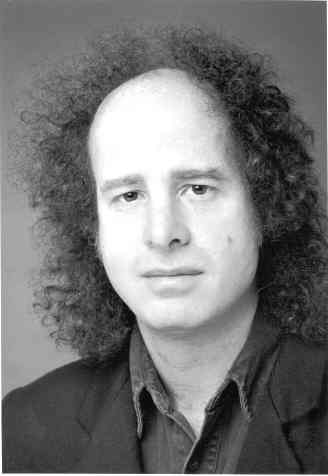
“When I die, I’m leaving my body to science fiction.”–Steven Wright

Steven Wright.  Would science take this?

Steven Wright. Would science take this?

When I die, I’m just leaving.  Happy paraprosdokian spring.

post

Cosmic Quote(s) #35: President’s Day

“Politics is supposed to be the second oldest profession. I have come to realize that it bears a very close resemblance to the first.”–Ronald Reagan

“May God save the country, for it is evident the people will not.”–Millard Fillmore

Note: in order to get the quote number 42 in time for Towel Day, there may be a slight increase in the frequency of these quote posts.

It’s hard to believe Ronald Reagan actually said something I agree with.

It’s hard to believe Millard Fillmore actually said anything.

At any rate, if you want to know the true spirit of President’s Day, visit your local Target or Best Buy.   And if you happen to be a banker, postal worker, teacher or government employee, enjoy your day off.    Also, check out one of my favorite blogs,  BLAHS winner Millard Fillmore’s Bathtub.

The spirit of President's Day:  last chance to clear out the Christmas overstock

The spirit of President’s Day

post

Time Out: Lillian Mountweazel and The Incredible Jungftak

Note: The following post appears simultaneously–with a slightly different title–in my monthly guest post on The Blog of Funny Names.

“You could look it up.”–Casey Stengel

Lillian Virginia Mountweazel.  To be or not to be?

Lillian Virginia Mountweazel. To be or not to be?

According to the 1975 edition of the New  Columbia Encyclopedia,   ”Lillian Virginia Mountweazel ( 1942-1973),  was an American photographer, b. Bangs, Ohio. Turning from fountain design to photography in 1963, Mountweazel produced her celebrated portraits of the South Sierra Miwok in 1964. She was awarded government grants to make a series of photo-essays of unusual subject matter, including New York City buses, the cemeteries of Paris and rural American mailboxes. The last group was exhibited extensively abroad and published as Flags Up! (1972) Mountweazel died at 31 in an explosion while on assignment for Combustibles magazine.”

It’s an incredible story–at least, according to the 1975 edition of the New Columbia Encyclopedia– with  ”according to” being the critical phrase. Because, you see, no such person ever existed.  The entry was bogus–a common practice among publishers of dictionaries, encyclopedias and even maps.  It was designed to catch copyright infringement.  This practice was hardly new, as I shall proceed to report.  However, it caused enough of a stir  that The New Yorker coined the term Mountweazel to mean any such copyright trap in published material, and the name has stuck.  As things of this nature often take on a life of their own, the eponymous Ms. Mountweazel now has a page on Facebook and a memorial society on Flickr.

But as odd as this story sounds, the course of events that led me to this discovery is stranger still.  It was a three decade odyssey that started back in the mid-1970′s.  While playing the game of Dictionary at the home of a (much older) friend,  I came across the following in the 1943 edition of Webster’s Twentieth Century Dictionary:

jungftak, n.–a Persian bird, the male of which had only one wing, on the right side, and the female only one wing, on the left side; instead of the missing wings, the male had a hook of bone, and the female an eyelet of bone, and it was by uniting hook and eye that they were enabled to fly, — each, when alone, had to remain on the ground.

That was it; there was no pronunciation and no etymology.

Wow.  I was flummoxed.  How bizarre was this?  I had to find out more.  I went to the local library and searched every encyclopedia and every dictionary, but found nothing.  Figuring that this bird had to be mythical, I next went to books on Persian culture and mythology.  Still nothing.  I was puzzled, but not deterred, and I never forgot this bizarre word and definition.  Over the next several decades I sporadically recalled this incident and searched again, each time to no avail.  No avail, that is, until about five years ago.  Through the miracle know as the internet, the Google search term ‘jungftak’ finally bore fruit.  I uncovered a 1981 article by one Richard Rex in the journal American Speech. He had also discovered this word and had the same issues with it.  His conclusion was that the entry was an early example of what, by the time of this article, had come to be called a Mountweazel.  A copyright trap.  It was quite a letdown, but at least I finally had an answer.

I discussed this phenomenon with Martha Barnette and Grant Barrett as a caller to the NPR show A Way With Words originally broadcast in January of 2010.  You can listen to this archived broadcast here.  My segment occurs about 20 minutes into the show.      Have fun listening, and don’t take any wooden Mountweazels.

post

Cosmic Quote(s) #34

“I hate Disneyland.  It prepares our kids for Las Vegas.”–Tom Waits

My first ever trip to Vegas was an inadvertent one, way back in 1978.   Driving from LA to Zion national park on our honeymoon,  Cheryl and I stopped on the Vegas strip for lunch.   Today I am headed directly there–no side trips, nothing inadvertent.  Normally, I would not write about a trip until after I take it.  I’m making an exception for this as, after all,  what happens in Vegas stays in Vegas.    I’ll see you when I get back, assuming I don’t stay there.