post

Conjecture #3: The Future (Part One)

I Conjecture:  Every Possible Future Exists

Part One: The Post-Newtonian Wordview

“The Future ain’t what it used to be.”–Yogi Berra

Yogi

Yogi, philosopher extraordinaire, deep in thought

Yogi was right. Literally.

He had absolutely no idea what he was talking about, but he was right nonetheless.  For the way we view the future is directly related to how we view physical reality. Ergo, as our understanding of physical reality changes, so changes how we think about the future.   An entire graduate level lecture could probably be based on this conjecture.  I’ll condense the basic idea to a few paragraphs.

Before Apple, the company, there was apple, the fruit.  And before that fateful day when one of those red orbs conked one Isaac Newton on the noggin, worldviews were simplistic and not generally  based on science.   They were mostly mystical or religious.  Supernatural forces ruled the world and what they had in store for mankind was up to them; it was not to be known by us.  But when the soon-to-be “Sir” Isaac set forth his rules of motion and gravity classical physics was born.  Every action had an equal and opposite reaction, every force and its interaction with mass was theoretically calculable, and therefore predictable.  Newton’s laws ruled physics, and indeed, most science based worldviews for nearly 250 years.

Then two guys named Einstein and Planck came along and screwed up the whole thing.  They were followed by the likes of Heisenberg and Bohr and Schrodinger, who threw the monkey wrenches of quantum mechanics, and most disturbingly, quantum uncertainty, into the mechanisms of physics.  Nothing was ever the same again.**

Just how did these 20th century scientific revolutions, along with chaos and complexity theories, alter the Newtonian worldview?

The Newtonian worldview was deterministic, the post-Newtonian worldview is not.  It was theorized, under Newton’s classical laws, that if one could know the position and momentum of every particle of matter and energy in the universe, then one could know everything that has ever happened and could predict everything that ever would happen in the future.   Quantum mechanics and uncertainty skewered that notion; it killed it stone dead.  As explained in my Quantum Weirdness primers, it is not possible to simultaneously know the exact position and momentum of quantum objects, and interactions of quanta with their environment are only calculable as probabilities. 

In other words, the Newtonian worldview asserted that we could calculate exactly where any particle of matter or energy would be at any time.  The post-Newtonian worldview states that we can only calculate the probability of finding it in a given position at a given time.  The disconcerting part of that last statement is the “finding” part.  For it asserts exactly that, the probability of finding it if we look for it; it does not predict where it is, for until we look it is effectively in every possible position at once.

How does this affect our view of the future and my conjecture that every possible future exists?  In the Newtonian worldview, there is no free will; everything is determined by the existing state of the universe and there is therefore only one possible future.  That would be the one that follows from applying Newton’s laws to the current state of every bit of matter and energy in the universe.  But in the post-Newtonian world, those rules do not work on a quantum level.  Position and momentum are uncertain and results of interactions can only be stated as probabilities.  In a non-deterministic world, free will is enabled and the totality of the future is unpredictable no matter how much data we have to crunch.

Does this future exist?

OK.  Many futures are possible.  But how can I assert that every possible future exists?   I’ll take that up in Part Two of this conjecture.

**It should be noted that while Albert  Einstein, along with Max Planck, laid the foundations of quantum mechanics, he never believed its predictions of uncertainty and randomness.  Perhaps his most famous quotation, “god does not play dice,” refers to this very matter.  He spent much of the last thirty years of his life attempting to find a deeper meaning–hidden variables–that would give the lie to these notions.  He failed and was ultimately proven wrong.  More about this in a future conjecture.

post

October 2: Four Birthdays

“There is still no cure for the common birthday.”–John Glenn

We celebrate four birthdays today–er, at least I do.  One is fictional, two historical and one hysterical (in more than one sense of the word).

Charles “Charlie” “Chuck” Brown,  b. Oct 2, 1950

Charlie Brown, b. Oct 2, 1950

“Of all the Charlie Browns in the world, you’re the Charlie Brownest.”–Linus

It was 62 years ago today that good ‘ol Charlie Brown made his first appearance in a syndicated cartoon.  All of seven newspapers were visionary enough to pick up the start of what would become the most iconic series in the history of American comics.  If Charles Schulz was writing today for the benefit of this blog, he might have used the term “multiverse” rather than “world” in the Linus quote above.  No matter, Linus, ever the philosopher, and his rancorous sister Lucy, are actually the characters in my two favorite Peanuts strips of all time.  In one Linus stares upward and ponders “Why is the sky blue.”  Lucy blasts out “BECAUSE IT ISN”T GREEN,” sending Linus tumbling over backward with his beloved blanket flying asunder.  In the other Linus turns tables on his evil sibling.  As she rants on and on about how crowded the world is becoming and that too many babies are being born with too many mouths to feed, Linus looks her straight in the eye and suggests, “So why don’t you leave?”

Mohandas Karamchand “Mahatma” Gandhi,  b. Oct. 2, 1869, d. Jan. 30, 1948

“Generations to come will scarce believe that such a one as this in flesh and blood ever walked upon this earth,” Albert Einstein describing Gandhi

Mohandas K. Gandhi, b. Oct 2, 1869

Few things in this life render me speechless.  Mohandas K. Gandhi is one of them. Glib as I may seem, I have no words to describe him.  Well, perhaps this.  If he had lived 2000 years ago, they would have named a religion after him. And, I might add, he would not have liked that one bit.

OK, maybe I’m not so speechless.  But the best description of the man and his life I can offer is to refer you to the 1982 film Gandhi. It won 8 academy awards including best picture, director, screen play and actor, the latter award going to Ben Kingsley for his masterful depiction of the man.  It was one of only two movies that ever left me speechless, the other was Schindler’s List.

Julius Henry “Groucho” Marx,  b. Oct 2, 1890, d. August 19, 1977

Groucho, b. October 2, 1890

“Quote me as saying I was mis-quoted,”–Groucho

Groucho…Gandhi…Charlie Brown…a cartoon character, a dead comic and a dead inspirational leader.  What do they have in common other than the same birthday?  They were all one of a kind;  the mold was broken after each one of them was made.  More importantly, they are collectively the inspiration for the “Ridiculous and Sublime” subtitle of this blog.  And as ridiculous as Groucho may have seemed, there was some amazing wisdom in many of his funny words.  “Marriage is an institution, and who wants to live in an institution?’  “Politics is the art of looking for trouble, finding it everywhere, diagnosing it incorrectly and applying the wrong remedies.” “Humor is reason gone mad.”  These are just a few of my favorites.  I’ll save the rest for future posts.

Mark Jay “What? Me Worry?” Sackler,  b. Oct 2, 1950

“Have you ever been told to think outside the box? My problem has always been, I can’t think inside of it.”–Me

Me, b. Oct 2, 1950. Picture taken on my 22nd birthday. If only I could still get away with acting this young.

In my case, I think they broke the mold before they made me. And while I’ve been called worse things than the sobriquet I gave myself above, I’m pretty sure that boring isn’t one of them.  At any rate, the three colossal  personalities profiled above represent a huge inspiration for this blog and for how I live my life. I hope they also inspire you a lot, even as I strive to inspire you a little.  As I contemplate another year shot to hell, I thank all of you who follow me here and put up with my own special brand of insanity.

post

Equations of Everyday Life #2: Inane Celebrity Memes

“You’re not famous until my mother has heard of you”–Jay Leno 

(Jay Leno graduated from Emerson College the same year I did.  Aren’t you unimpressed?)

Lindsay Lohan…Paris Hilton…Charlie Sheen…you just gotta follow these people to be “with it” in this day and age.  What I can’t figure out is exactly what “it” is. The nonsense involving these silly (do I dare say ridiculous?) excuses for humanity, and the speed with which their inane meme virality propagates throughout the internet and general mediasphere is stultifying.

 How do we quantify this vacuous tripe?  Quite obviously with:

The Index of Inane Celebrity Meme Virality

Get out your calculators folks, though the math on this one may require something more like a Cray supercomputer.   This process requires not one step, but three.

  1. Rate the inanity
  2. Compute the Virality Index
  3. Classify the virality using the Virality Classification Scale

Rating Inanity

This part is for those of you who—like many politicians—prefer fuzzy math.  In order to compute the virality of an inane celebrity meme, you first need to give it an inanity rating.  This, however, does not compute.  You need to estimate it by a process that could be seen as similar to the way we old folks were taught to compute square roots in days before electronic calculators.  You sort of have to zero in on it—surround it, using  a combination of whatever logic or intuition works for you.

Using a scale of 0 to 1.0, we rate the inanity based on how unusual, how cable newsworthy and, of course, how inane it appears to be.  Using the Lindsay Lohan example, let’s rate some real and imagined events.

Lindsay Lohan gets up in the morning and brushes her teeth (or not).  Probable rating=0  (probable rating because, again, there is some subjectivity here).

Lindsay Lohan gets busted for another probation violation.  Approximate rating=0.5 (This is fairly commonplace but due to media culpability still maintains some newsworthiness.  Also, the specific story behind the arrest may result in some adjustment up or down; the next item demonstrates this.)

Charlie Sheen stubs his toe on the curb of 34th Street in NYC, stumbles into oncoming traffic causing Lindsay Lohan to swerve her speeding Porsche through a display window at Macy’s, decapitating several mannequins, skidding across the retail floor and then crashing through a sidewall into a back room where she runs over Paris Hilton who was in the act of giving her boyfriend a you-know-what.  Absolute rating of 1.0.  This theory does not permit a rating higher than 1.0, but we’ll give this one a 1.0 with a star, meaning it also generates spontaneous orgasms in Jon Stewart, Stephen Colbert and every Fox News and CNN anchor past, present and future.  (Note that while coverage on Comedy Central will actually lampoon the coverage by the other networks, this will add even greater fuel to the viral fire than serious reporting).

Computing the Virality Index

Here comes the fun.

ξ = Φ(F+T)(µ-110)

Symbol key

ξ =Virality Index I chose that squiggly symbol because I think it looks like Kate Middleton mooning the paparazzi.

Φ =Inanity rating Aren’t those Greek thingies cool? This one is iota, as in “I don’t give one iota of a hoot about these nitwits”.

F= number of “friends” or “likes” on celebrity’s Facebook page

T= number of Twitter followers of the celebrity There is a reason they call it TWITter.

µ =the median IQ of the set whose members are F+T. For the uninitiated µ is the scientific symbol for micro.  How appropriate. (Can’t you just imagine those two sentences being uttered by Dr. Sheldon Cooper?)

To sum it up:

The virality index is the inanity rating multiplied by the combined number of Twitter and Facebook followers multiplied by what I call the vacuity index (median IQ of all followers minus 110).

Classify the Virality

For any chance at virality, the final Index number MUST be negative.  This works perfectly fine for most of the personalities discussed above.  If we are talking about Stephen Hawking, however, there is a better chance of finding virality in the singularity at the center of a black hole.

The classifications of virality are as follows

If ξ ≤  -100,000  minimally contagious

If ξ ≤  -500,000  highly contagious

If ξ ≤  -1 million  immutably viral

If ξ ≤  -10 million globally pandemic

If ξ ≤  -100 million worthy of hours of uninterrupted coverage on CNN and FOX News.

Still to be determined is the threshold at which Geraldo Rivera coverage kicks in.

So if we compute the Charlie Sheen meme virality index for the automobile accident scenario hypothesized above,  we multiply the inanity index of 1 times the combined number of his Twitter and Facebook followers (roughly 10.5 million, don’t worry about being exact, this is fuzzy math) times the vacuity index. We will estimate the latter for Sheehan as (100-110)= -10.  This may be generous but 100, after all, is the definition of median IQ.  This yields a score of -105 million.  If you compute and add to this the scores for Paris Hilton and Lindsay Lohan who were also involved in the scuffle,  the Index plunges much lower.  The New York Post would be sure to issue a special edition.

This leaves one unanswered question, however.  We now know how to compute the manner in which these viral memes are turned on.  But what determines how they are turned off?  As you would expect, I have the answer which I call the medialogical constant.  I will discuss this in the next Equations of Everyday Life post, which may or may not be published within your lifetime.

Images credit: Meme Center   All other material in this post ©2012 Mark Sackler


post

Cosmic Quote #8

“How is it possible to find meaning in a finite world, given my waist and shirt size?”–Woody Allen

(c) 2012 Matthias Giesen. Used by permission. Click image for link.

Physically, I am now back in Connecticut.  Mentally, I am still on vacation in Dubai.  My circadian rhythms?  MIA–but probably floating somewhere north of Saturn and west of Alpha Centauri.  The time difference is 8 hours and we partied way too late every night for old farts of our pre-digital generation.   (We didn’t chose Dubai to vacation, it chose us.  More on that some other time; now back to my day job.)

post

Vacation Rerun: With Friends Like This

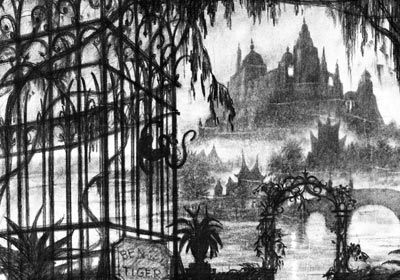
Xanadu (as Orson Welles saw it in Citizen Kane)

If it’s good enough for the networks, it’s good enough for me.  So for the next week, MCN (Millennium Conjecture Network) will fill dead air with some awesome blasts from the past.  Those of you who joined the class late can catch up, those of you who were early adapters can review or take a nap.   The new season starts when we return from Xanadu.  Cheers!

“Outside of a dog, a book is man’s best friend. Inside of a dog, it’s too dark to read.”
– Groucho Marx

Let’s get this straight.  In case you were getting the impression that this blog is the ranting of an intellectual snob, I present contrary exhibit A.

Would a snob of any kind have a friend like this?

Here’s the story.  As I emerged from the Milford Indoor Tennis club after a regular Sunday morning game of doubles, I noticed that one of the guys in our group, Bob Dolan, had parked his minivan in an unusual manner.  It was facing down a slight incline, backed up to the curb, with a wooden block placed in front of the rear left wheel.

“What’s with the block,” I inquired..

“My parking brake doesn’t work.,”  Bob replied.

“What about your PARK gear?”

“That doesn’t work either!”

“Wow,” I said, “what did you have to do to park on that incline? Have two guys hold it in place while you put the block there?”

At which point, I took the following video, narration by Harvey Ellis.  Another of my buddies, Bruce Marien, observed that this won’t go viral, but it might go fungal!

(by the way, to add to the insanity, that thing tied via bungee cord under the front bumper on the driver’s side is the cars’ computer!)

Would someone please send this to Car Talk before they go off the air?

post

Timeout: Google This! (or, The Color of Stupidity)

“If there are no stupid questions, what questions do stupid people ask?”–Scott Adams

“We are all born ignorant, but one must work hard to remain stupid.”– Benjamin Franklin

Ben on stupidity

Good ol’ Ben knew stupidity when he saw it.

Nothing enables stupid, silly, naive, ridiculous or downright ignorant questions like internet search engines.  Judging by some of the search queries by which my blog has been found, I’m guessing that some of these people were either drunk in a bar, or reading too many ridiculous blogs.  Courtesy of WordPress.com’s excellent blog stats page, here are some of the best examples,  along with my appropriately astute responses.  (NOTE:  These are all verbatim from the aforementioned WordPress stats summary.  Somebody out there actually found my blog using these search queries.)

Where would we be if we traveled 777 billion light years?  I have no idea, but I’d hate to have to pick up the tab for the cab ride home.

Sixteen times four equals what?   Probably 42, if you are Douglas Adams

Let me explain infinity, it is a measure of a human power, which actually not compatible, .  for ex infinity is sir Albert Einstein…   I just report them; I don’t explain them.  But if you have any clue as to what planet the person who wrote this query is from, please inform us all.

Mark Sackler DVM  After 30 plus years of marriage to a veterinarian, I have apparently been awarded an honorary degree.  I certainly deserve some sort of award–or at least sympathy.

Barbayaki  Say what??!!  (According to the stats, this query has found my blog FOUR times.  As Casey Stengel said,  “you could look it up.”)

Why they add 1 millennium in 21st?  OK.  I give up.  Why?

Funny pro-conservative bumper stickers     See my post on non-existence. 

Millennium Twain NASA   You left out rutabaga.

Funny names for mark  What? “Mark” is not funny enough by itself?

Molenium conjectures  Hey, moles can have ideas, too.

Is there still a lawyer for Einstein?  I’m not sure, but I think there is a lawyer for everything–even non-existence.

Please feel free to share your responses to any of these nut-case inquiries,  and be sure to check back in a couple of months.  There are bound to be more where these came from… 😉

post

We interrupt this blog to bring you the World Series of….

…Sailing!?

“What do you want to be a sailor for? There are greater storms in politics than you will ever find at sea. Piracy, broadsides, blood on the decks. You will find them all in politics.”–David Lloyd George 
Sailing?  Really?!!  If you know me, you were expecting baseball, golf, poker–anything but sailing.  What do I know about sailing?  Put it this way: when I arrived in the San Francisco Bay area Saturday night, I had no idea that the first event in the  America’s Cup World Series 2012-2013 season was going on here this week.  But leave it to my 90-year-old stepmother, Elizabeth, to know exactly what’s going on in her territory.  We hopped on the ferry from Alameda to pier 41 in San Francisco harbor Sunday morning,  found a great and uncrowded vantage point at the end of pier 45,  and watched the final race in the first of 4 series events leading up to next year’s  Louis Vuitton Cup and America’s Cup final.   It was surprisingly colorful and fun to watch, and during the two legs of the race that came right by us, we had a better view than anyone other than the helicopters and seabirds overhead.
 
The results:  Defending champion Oracle Team USA–Spithill came on with a rush at the finish of the 11-boat  fleetrace but fell three seconds short of the winner, Italian  Team Luna Rosa–Piranha;  but the second place finish was good for a one point victory for  Sptithill over Piranha in the week-long final standings.   The Vuitton cup held here next summer will determine the challenger to Oracle USA for the  34th America’s Cup final in September 2013.
 
post

Timeout: This is Not a Pipe

“I am two with nature.”–Woody Allen

This is not a pipe

The Treachery of Images, by Rene Magritte, 1928-29
Ceci n’est pas une pipe. This is not a pipe.

René Magritte’s message is rather unambiguous.  An image of a “thing” is not the thing itself.  But don’t worry, I’m not headed toward a heavy ontological discussion here.  I have a simple question which, believe it or not, my overly opinionated philosophical mind has virtually no idea how to answer.   Maybe one of you out there can help.

I love nature photography.  Flowers, birds, wildlife, oceans, lakes, clouds, mountains, landscapes–you name it, I like looking at these images and they are my favorite to photograph.  Good grief, I’ve even photographed mud puddles and insects.  And yet I am not, by any stretch of the imagination, what one would call a nature lover.  I hate gardening and yard work.  I won’t even mow my own lawn as I am allergic to grass pollen. I haven’t been camping in 30 years and only rarely go hiking.  I do spend a good bit of time outdoors, but this is almost entirely involved with playing or watching sports.  It seems that I prefer a well framed image of nature to the actual experience of nature itself.  And to add to the conundrum, this only applies to photographic images.  My preferences in other visual arts tends towards styles or schools–Surrealist (Miró), Social Realist (Hopper), Post-impressionist (Seurat, Rousseau, Van Gogh), Geometric Abstraction (Klee, Mondrian).  (Here is a link to my favorite contemporary artist, Yanick Lapuh.)

I have only just realized this–and really have no strong ideas about why this should be.  A preference for a well-composed image?  Remnants from a childhood anxiety of physical reality?  Or, like Woody, am I just at two with nature?   All you amateur psychologists please provide your opinions by email, snail mail, or pony express.  (Comments herein are OK, too)

Below, three of my personal favorite landscape photographs from my own travels, as well as a couple of representative pieces by Monsieur Lapuh.

(Click on images for full size)

Sideways tree

Sideways Tree. Looking out from the Great Wall of China. Copyright 2006, Mark Sackler

coastline

Costa Rica Coastline. Copyright 2008, Mark Sackler

Loch

A Scottish Loch. Copyright 2010 Mark Sackler

Objection Your Honer, Yanick Lapuh, 1993

Envisioned Solution, Yanick Lapuh, 2006

quote

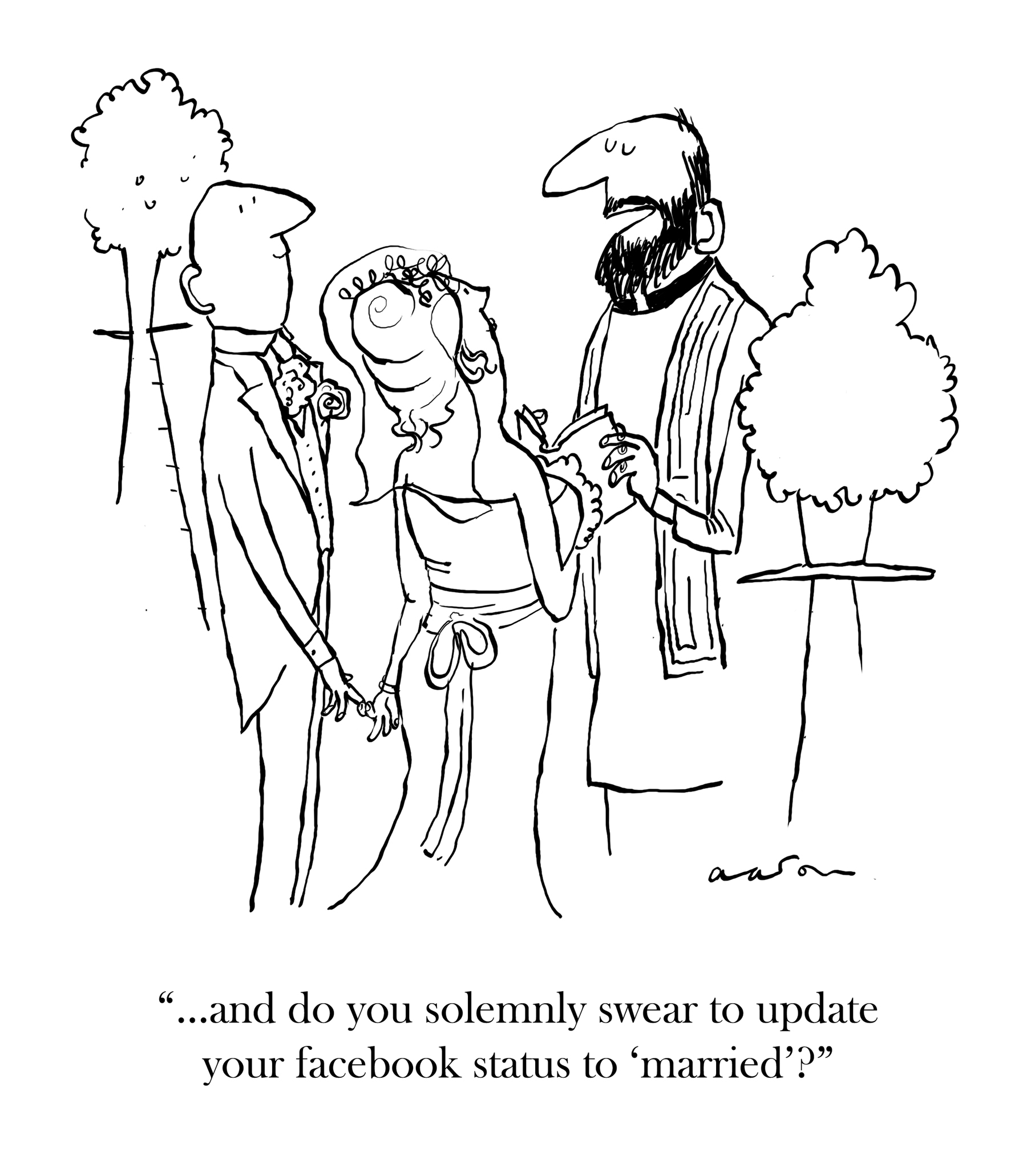
“Women marry men hoping they will change. Men marry women hoping they will not. So each is inevitably disappointed.”– Albert Einstein

Copyright cartoonstock.com. Used by permission.

Hmmm.  Ol’ Albert may have known more about everyday life then he is commonly given credit for.  After 34-years, my wife still hasn’t learned this lesson.  She is still trying to change me.  I keep telling her to leave me alone as I am a finished product;  I couldn’t possibly get any worse.

quote

“A child of five would understand this. Send someone to fetch a child of five.”-Groucho Marx

Now if I could only find a child of five to write my next post, I could get out of here for the weekend.

Forever five years old