post

Cosmic Quotes) #29

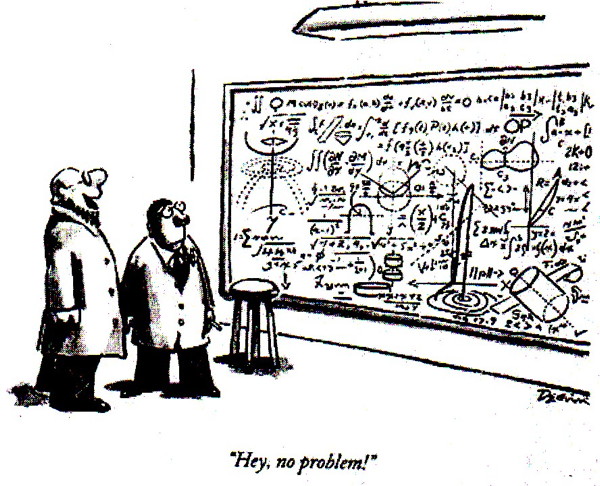
“Science is magic that works.”-Kurt Vonnegut

“Any sufficiently advanced technology is indistinguishable from magic.”–Arthur C. Clarke

www.cartoonstock.com Used with permission

http://www.cartoonstock.com Used with permission

If I could write like Clarke or Vonnegut, that would be indistinguishable from magic.  The fact that I can still get up in the morning–or most mornings, anyway–that is magic.  Now if that little fairy to the left would only tell me what to write next…

post

Time Out: Possibilianism

“Our reality depends on what our biology is up to.”–David Eagleman

“What a life in science really teaches you is the vastness of our ignorance.”–David Eagleman

Note: Regular followers of this blog will have noted that I avoid discussions of religion and faith issues herein.  There is a reason for this:  I am not interested in discussing them.  Anyway, if you have read many of my posts you will likely have figured out where I stand on this by now.  However, I am making an exception with this post for a specific reason.  Possiblianism is to faith, what these Millennium Conjectures are to physics and metaphysics.  I am speculating on what might be the answers to unknown questions, based on what we do know about physics and cosmology–all the while keeping an open mind and not drawing any absolute conclusions.

In between theism and atheism lies a vast limbo generally referred to as agnosticism.   While the dictionary definition of agnostic is someone who believes the answer to the question of god’s existence and/or the meaning of life is unknowable, the term is often used more broadly.  The agnostic may be undecided.  The agnostic may not care and consider the question irrelevant.  Some point to such individuals and say they are just too wishy-washy to make up their minds.  The common thread among all of these, though, is that the agnostic sees no firm proof either way.  Along comes Possibilianism, which might be seen as a sort of proactive form of agnosticism.

The term Possibilianism was coined and defined by neuro-scientist and author David Eagleman, in discussion of his book, Sum: 40 Tales from the Afterlife.  When asked by an NPR interviewer whether he was a theist or atheist,  Eagleman replied that he considers himself Possiblian.   “I’m open to…ideas that we don’t have any way of testing right now,” he said.  That is a good way of explaining what my Millennium Conjectures are as well.

.

I’ve read Sum, which is a compilation of 40 possible scenarios for what happens when we die;  none of these scenarios are typical religious views of heaven or hell,

or atheist views of eternal nothingness.   Many of the scenarios seem over-the-top bizarre.  Except when you stop to think about it.  None of them are really any more preposterous than what most religions already believe.  But all of them do have rather strong moral or philosophical points to them;  they are all excellent fodder for contemplation.   At any rate, it was a best seller that received rave reviews from the likes of The Wall Street Journal, The Observer and The Los Angeles Times.  

Below is a short You Tube discussion of the concept by Eagleman.  There are much longer ones available if you have the time and inclination.  As for my ever getting to conjecture #5,  I think I’m finally done with the preliminaries, so, yes, it’s a possibility!

post

Tribute Rerun: We interrupt this blog to bring you the World Series of….Sailing!?

I’m not a really fan of sailing–I don’t even play one on T.V.  But after Team Oracle USA’s stunning comeback victory–8 consecutive race wins to retain the Americas Cup after trailing New Zealand 8-1–I felt inspired to repeat this post from September of last year, a recount of probably the only time ever in my life I will watch a complete world class sailing event, in person or on TV.  And hats off to Team Oracle for staging perhaps the greatest comeback in sports history.

“What do you want to be a sailor for? There are greater storms in politics than you will ever find at sea. Piracy, broadsides, blood on the decks. You will find them all in politics.”–David Lloyd George
Sailing?  Really?!!  If you know me, you were expecting baseball, golf, poker–anything but sailing.  What do I know about sailing?  Put it this way: when I arrived in the San Francisco Bay area Saturday night, I had no idea that the first event in the  America’s Cup World Series 2012-2013 season was going on here this week.  But leave it to my 90-year-old stepmother, Elizabeth, to know exactly what’s going on in her territory.  We hopped on the ferry from Alameda to pier 41 in San Francisco harbor Sunday morning,  found a great and uncrowded vantage point at the end of pier 45,  and watched the final race in the first of 4 series events leading up to next year’s  Louis Vuitton Cup and America’s Cup final.   It was surprisingly colorful and fun to watch, and during the two legs of the race that came right by us, we had a better view than anyone other than the helicopters and seabirds overhead.
The results:  Defending champion Oracle Team USA–Spithill came on with a rush at the finish of the 11-boat fleet race but fell three seconds short of the winner, Italian  Team Luna Rosa–Piranha;  but the second place finish was good for a one point victory for  Sptithill over Piranha in the week-long final standings.   The Vuitton cup held here next summer will determine the challenger to Oracle USA for the  34th America’s Cup final in September 2013.
post

Photo Op #6: The U.S. Open

“This taught me a lesson, but I’m not quite sure what it is.”–John McEnroe

“I smile a lot, I win a lot, and I’m really sexy.”–Serena Williams

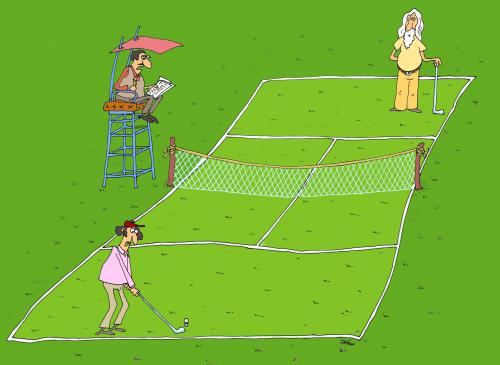
My golf AND tennis games feel like this sometimes.

My golf AND tennis games feel like this sometimes.

Check off another bucket list item.  I finally spent a day at the U.S. Open tennis championship, on Tuesday, September 3.  It taught me a couple of things, and unlike John McEnroe, it think I know what they are.

The first is, what in the world was I waiting for?  I should have done this years ago, considering I live only about 65 miles (or 100km) from the Billie Jean King Tennis Center.  The second?  If’ I’m going to take pictures, maybe I should bring something more advanced than my iPhone 4.  Yes, I actually am considering the upgrade to the 5S based on the reviews I’ve read of the camera.  In spite of my previous post, I’m betting I can’t  get any more distracted than I already am.  Take a look at the following images and then take the poll to provide me with your opinion of what I should do for a camera if I go next year.  Oh, as far as the question of Serena being sexy, we’ll keep those opinions to ourselves.

.

.

The view from my seat from the loge in Ashe Stadium. The iPhone 4 picture only makes it look like nose bleed territory.

The view from my seat from the loge in Ashe Stadium. The iPhone 4 picture only makes it look like nose bleed territory.

.

.

.

THE DRAW

THE DRAW

.

.

The top seeded women's doubles team of Errani and Vinci going about their business.

The top seeded women’s doubles team of Errani and Vinci going about their business.

OK.   So now, tell me what I should do for capturing images if I go to open next year.

post

Equations of Everday Life #1.1: Smartphone Distraction Update

“What’s the killer app?  Making a phone call.”–Steve Jobs

“I only have dummy phones.”–Don Rickles

With the announcement of the new iPhone models 5S and 5C its time to revisit, with slight modification, the original post of this series.  Appropriately enough, I now use an app on my iPhone for tracking my bicycle treks.  So now I have distracted cycling to go along with distracted everything else.  To paraphrase Don Rickles, we only have dummies with phones.  Present company?  No comment.  For the original version of this post, click here.

.

.

.

.

.

THE ALGORITHM OF SMART PHONE DISTRACTION

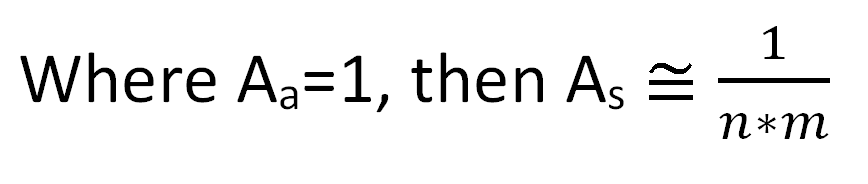
Don’t be deceived.  It is far more complicated than it looks.   Where attention to the outside world in the absence of a smart phone (Aa)equals 1, then attention to the outside world in the presence of a smartphone (As) is approximately equal to the inverse of the number of cool apps on said smartphone (n) times the I-Phone or equivalent model number (m).    Yes, approximately equal to—because nothing is that precise in the quantum mechanical world of electronics, and anyway I like using that smart looking squiggly thingy over the equal sign.   Taking the example of my own I-Phone 4, I have 14 apps I would describe as being “cool.”  As 14 x 4 is 56, then when I am packing my phone, my attention level to the outside world is an astonishingly small 1/56th of normal.  This is dangerous.  As I’m reputed to be a major space shot to begin with,  I should probably be banned from breathing and texting at the same time.   But that calculation can wait for another day, as even the basics get much more complicated.

Siri

What will happen if I upgrade to the new I-Phone 5s and add the pernicious feature known as Siri?

It gets ugly in a hurry.  The equation now looks like this:

NEW SIRI

Yikes!  We now have to square the denominator and in the personal example stated above, my attention level would be 1/702of my normally spaced out self.  This computes to 1/4900.

I don’t know if the Planck length applies to this,  but a few more apps and new models and my attention level will certainly approach it.  Also note that the “s” on the right side of the equation stands for Siri and has no numerical value.  It just makes the equation appear more complex and disguises my general ignorance of advanced mathematics. Anyway, this demonstrates why I don’t yet have Siri.  If I did, I would have proposed to her long ago and been off to Vegas for a quickie divorce from my wife by now.  Ah, for the days when the internet was still in black and white.

Endnote:  The addition of the new model 5C creates a conundrum.  How should we calculate for that, and for that matter, what’s the difference? Well, C apparently stands for cheap, and that’s as in construction, not price.   Any suggestions how to compute that?

post

Cosmic Quote #28

“The meaning of life is a rutabaga.”–Garrison Kiellor

www.cartsoonstock.com Used with permission

http://www.cartsoonstock.com
Used with permission

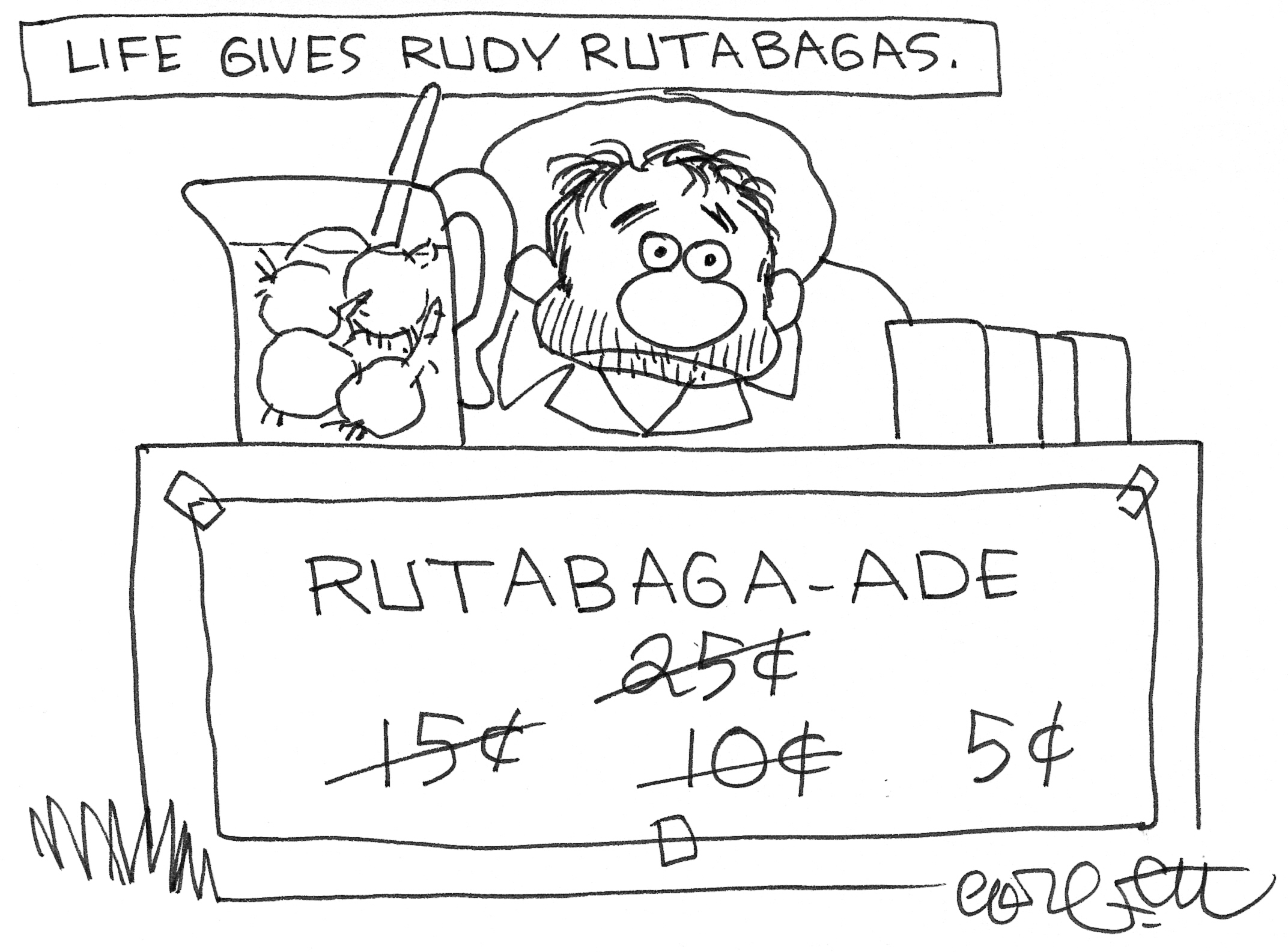
Here is an existential dilemma if ever there was one.  I cannot stand Garrison Kiellor, but I cannot resist jokes about rutabaga.  The word rutabaga itself is just too funny; I guess funny won out.  Maybe ‘ol Garrison drank some rutabaga-ade before making that terrible movie a few years ago.  It must have tasted like-er–well…rutabaga.  😀   For more on rutabaga, including information on national rutabaga month, check out this crazy site…  The Rutabagan

Signature  @MarkSackler

post

Google This! Search Term Haiku #3

“The poets have been mysteriously silent on the subject of cheese.”–Gilbert K. Chesterton

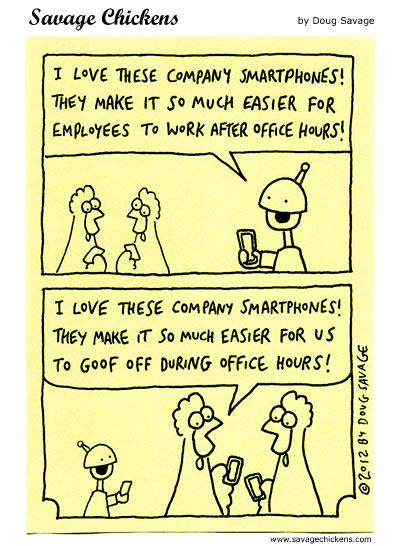
While poems about cheese may be few and far between, there is no shortage of cheesy poetry, especially on the web.  Far be it for me to not to jump on that band wagon.  So, until some cheese-related phrases start turning up in my search terms, I’ll have to settle for cheesy.  You, like the chickens at left, are more than free to ignore me. The rules, once again, for search term haiku, are as follows:

  1. Every phrase must come from search terms actually used to find this blog, per my WordPress stats page.
  2. The poems must follow the accepted Anglicized format of the traditional Japanese art form: three lines of 5, 7 and 5 syllables respectively.
  3. Each line must constitute an actual individual search term phrase, verbatim.  The only changes allowed are punctuation and truncation.  (Phrases may be taken from within search terms).
  4. Words may not be changed or rearranged. Typos and misspellings must not be corrected.
  5. Phrases may be combined or extended to multiple lines, as long as the previous four conditions are met.

When you are done ignoring the haiku below, you can ignore more of them here.  These were a bit harder to construct, folks.  Cheesy search term haiku requires cheesy search terms queries;  get out there and throw me some Gouda.

Tacky Education

Vinyl lettering

education wallpaper

of Mark Twain quotes

.

Three Course Meal

Dog swallowed brillo,

a veterinarian

and Schrödinger’s Cat

.

Meow vs. Woof

How to count like cat?

My schipperke is clever

physics equation.

.

Existential Stench

I am alone in

Millard Fillmore’s Bathtub blog

with Pepe Le Pou*

.

Equation #2

Real life example

of Lindsay Lohan cup size

celebrity meme.

.

*SIC

.

Signature   @MarkSackler

post

Cosmic Quote #27

“Photons have mass?  I didn’t even know they were Catholic.”–Woody Allen

photonI’m pretty sure they aren’t Catholic even if they do have mass.  Einstein was right anyway, no mass moves at the speed of light.  Stay tuned, you might even see some real science soon.  (If you don’t get the gag to the left, go back and review the entire Quantum Weirdness series.)

post

Quantum Weirdness 107: Bell’s Inequality

Note:  I said in Quantum Weirdness 106 that I was done with this series for now.  There are two possibilities here.  Either my definition of “for now” is a very short time, or I have branched off into an alternate universe where the term “done for now” has no meaning.**  Then again, I could have branched off into an alternative universe where, instead of writing this post, I would be lying on a Mediterranean beach next to a super-model in a string bikini.   I wish.

**Okay, I might just have have lied.

“God does not play dice.”–Albert Einstein

“Quit telling god what to do.”–Niels Bohr

It’s complicated.  And this just about reaches the limit of my own understanding.

The whole point of Einstein’s comment is that he could not accept the random nature of the quantum world.  He could not accept that quanta of matter and energy, and all their itinerant properties, only exist as probabilities until we observe  them.  He felt that there must be hidden variables that gave them these properties whether anyone was watching or not.  “I’d like to think the moon is there whether I am looking or not,” he said.

He was wrong.  Well, I don’t know about the moon, as that invokes the infamous Schrödinger’s Cat problem and it’s obfuscation of the Copenhagen Interpretation.  But for those tiny little quantum bits of stuff, it seems as if he blew it.

It all boils down to two papers.  The first was a 1935 paper by Einstein, along with colleagues Nathan Rosen and Boris Podalsky that proposed a thought experiment to demonstrate that there are only two possible explanations for certain properties of quantum mechanics: either there are hidden variables governing the quantum world, or else, as Einstein called it “spooky action at a distance.”  This has become known as the EPR paradox.

The second was a 1964 paper by John S. Bell, proposing an equation and related experiment that could be used to determine which of the alternatives is correct.  This became known as Bell’s inequality.

The technology did not yet exist, though, to make the measurements required to determine the solution to Bell’s equation. That did not occur until Alain Aspect, et al, performed an experiment in 1981 that proved, finally, that Einstein was wrong: no hidden variables exist; it’s spooky action at a distance.  At least, that is,  until further notice.

A  fairly facile explanation of the concepts and history is available here (including a brief touching on their relationship to Schrödinger’s Cat) and some subsequent contrary opinions here.  Or for those who can’t (or prefer not to) read, see the video that follows.  Confused?  One of the greatest scientific minds of the 20th century, Richard Feynman, said that nobody understand quantum mechanics.  Boy, does that give me free rein to get crazy with conjecture #5: Quantum Solipsism.   There may actually be a universe where I finally write and post it.

Whew.

post

Tales of a Veterinary Spouse #6: Say what!?

“I got a big mouth.”–Floyd Mayweather, Jr.

Note: This material is rated PG-13.  My wife should have realized that before she retold this story to a bunch of Catholic middle-schoolers at a career night.  Have you heard the phrase “he (or she) has a mouth that could make a sailor blush?”  Cheryl could make Larry Flint blush.

blah blah blahIt was the late night for office hours at the clinic–a Thursday to be specific.  It was a few minutes before 8 PM closing, and the doctor undoubtedly was tired and ready to go home.  But she had just come back from a seminar that focused on bonding new customers to the practice, and wouldn’t you know it, the last appointment of the day was a newbie.

The woman was in her mid 20’s or so, and the kitty she had just adopted was her first pet ever.  Despite the fatigue of a long day, Cheryl was determined to execute a perfect “bonding” experience.  She launched in her “new kitten” spiel,  and  all was going well for the first few minutes.  But then the office manager stuck her head in the exam room and interrupted.

“Pat D. is on the phone, Cheryl,” she reported matter-of-factly, “he wants to know if he can bring his dog in for a semen sample.”

“What?  You’re kidding me.  The lab has already picked up today and I am out of gas.  Tell him to bring the dog in tomorrow morning.”

So much for that, or so she thought, and immediately pushed the “kitten spiel” button and resumed the pitch.

But something had changed.  The customer seemed distracted, even a bit perturbed.

“How do you do that?” The young woman asked, two minutes into the resumed talk.

“Huh, do what?”

“How do you get a semen sample from a dog.”

Cheryl is never one to mince words or be diplomatically indirect under any circumstances.  At 8 PM after a 12 hour day of appointments, this was certainly not going to be an exception.   Making the appropriate gesture, she curtly replied, “hand job!”

Thinking that would be the last of it, she forgot about it and resumed the kitten spiel.  But the woman was still not paying attention, and two minutes later interrupted Cheryl again.

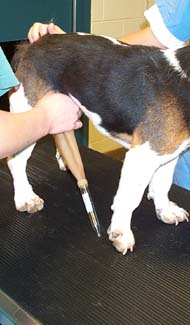
This really is how it's done.

This really is how it’s done.

“C’mon how do you really do it?’

“Huh, do what?”

“How do you really get a semen sample from a dog?’

“Well,” she replied impatiently, “really, you get a cup and you stimulate the dog manually and, well, I can show it to you in a text book if you want.”

The woman frowned and Cheryl resumed the kitten talk, but it was readily apparent that the client was still not satisfied with the answer.  In fact, she appeared downright angry. Within a couple of minutes, she abruptly changed the topic for a third and most emphatic time.

“You’re just goofing on me,” and by now she was almost yelling, “HOW DO YOU REALLY GET A SEMEN SAMPLE FROM A DOG?”

Cheryl had had enough.

“Look at it this way lady, I’m not gonna give him a blow job!”

That ended that.  Permanently.  She never saw that customer again, and to this day she reckons it was worth sacrificing one client just to have the story.

Oh, and she really did tell that story at a Catholic middle school career night.  The students loved it; the nuns were horrified. She never got asked back, and I’m guessing she thinks that was worth it as well.

If you enjoyed this story, just wait for the next Tales of a Veterinary Spouse, which will deal with extracting semen from a rather larger species.

Cheers.

Signature    On twitter @MarkSackler