post

Timeout: This is Not a Pipe

“I am two with nature.”–Woody Allen

This is not a pipe

The Treachery of Images, by Rene Magritte, 1928-29
Ceci n’est pas une pipe. This is not a pipe.

René Magritte’s message is rather unambiguous.  An image of a “thing” is not the thing itself.  But don’t worry, I’m not headed toward a heavy ontological discussion here.  I have a simple question which, believe it or not, my overly opinionated philosophical mind has virtually no idea how to answer.   Maybe one of you out there can help.

I love nature photography.  Flowers, birds, wildlife, oceans, lakes, clouds, mountains, landscapes–you name it, I like looking at these images and they are my favorite to photograph.  Good grief, I’ve even photographed mud puddles and insects.  And yet I am not, by any stretch of the imagination, what one would call a nature lover.  I hate gardening and yard work.  I won’t even mow my own lawn as I am allergic to grass pollen. I haven’t been camping in 30 years and only rarely go hiking.  I do spend a good bit of time outdoors, but this is almost entirely involved with playing or watching sports.  It seems that I prefer a well framed image of nature to the actual experience of nature itself.  And to add to the conundrum, this only applies to photographic images.  My preferences in other visual arts tends towards styles or schools–Surrealist (Miró), Social Realist (Hopper), Post-impressionist (Seurat, Rousseau, Van Gogh), Geometric Abstraction (Klee, Mondrian).  (Here is a link to my favorite contemporary artist, Yanick Lapuh.)

I have only just realized this–and really have no strong ideas about why this should be.  A preference for a well-composed image?  Remnants from a childhood anxiety of physical reality?  Or, like Woody, am I just at two with nature?   All you amateur psychologists please provide your opinions by email, snail mail, or pony express.  (Comments herein are OK, too)

Below, three of my personal favorite landscape photographs from my own travels, as well as a couple of representative pieces by Monsieur Lapuh.

(Click on images for full size)

Sideways tree

Sideways Tree. Looking out from the Great Wall of China. Copyright 2006, Mark Sackler

coastline

Costa Rica Coastline. Copyright 2008, Mark Sackler

Loch

A Scottish Loch. Copyright 2010 Mark Sackler

Objection Your Honer, Yanick Lapuh, 1993

Envisioned Solution, Yanick Lapuh, 2006

quote

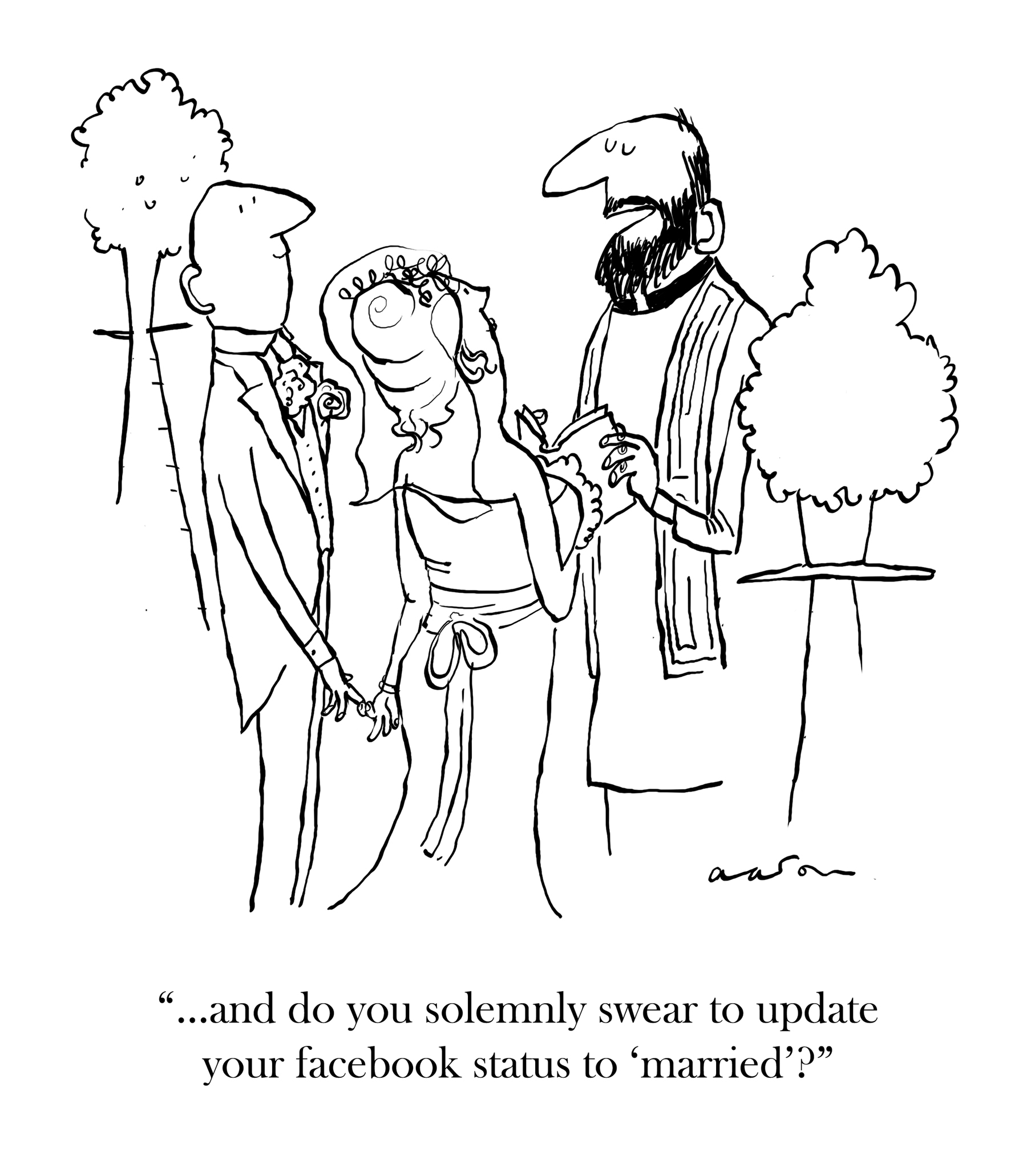
“Women marry men hoping they will change. Men marry women hoping they will not. So each is inevitably disappointed.”– Albert Einstein

Copyright cartoonstock.com. Used by permission.

Hmmm.  Ol’ Albert may have known more about everyday life then he is commonly given credit for.  After 34-years, my wife still hasn’t learned this lesson.  She is still trying to change me.  I keep telling her to leave me alone as I am a finished product;  I couldn’t possibly get any worse.

post

Conjecture #2: Inevitability (Part 2)

I Conjecture:  In an infinite multiverse we must exist.

Part Two: The impossibility of non-existance

“Needleman was rarely out of public controversy. He published his famous ‘Non-Existence: What To Do If It Suddenly Strikes You’.”–Woody Allen, ‘Remembering Needleman’ (short story)

Image credit: http://www.savagechickens.com (click image for link)

If you think imagining infinity is difficult,  try imagining nothing.  No, I don’t mean blank your mind.  I mean imagine nothingness.  NO!  I don’t mean a vacuum–empty space with no matter and energy.  I mean absolutely nothing:  no space and no time.  I’m betting you can’t do it, even if you think you can; you’re not, even if you think you are.   I merely conjectured that the concept of infinity could not exist in a finite universe, but I am firmly asserting that a conscious entity is incapable of imagining absolute nothingness.  It’s an oxymoron. By the mere fact of imagining you have to imagine something.  And while it might be pure philosophy to suggest it couldn’t be because we are incapable of imagining it, there is strong scientific argument for the “something out of nothing” impossibility of non-existence.  From Hawking on down, physicists have come to the conclusion that there is no such thing as absolute vacuum, that space is full of quantum foam, seething with instability and particles of energy and matter popping in and out of existence.  If matter plus antimatter equals nothing, than by commutation, nothing equals anti-matter plus matter.  (Yes, I know. The intelligent design crowd will reject this and tell us that it is all too perfect.  God must have done it.  Really? So God can exist out of nothing but the universe can’t?  When they can tell me where god came from and offer some form of empirical evidence, I will consider their arguments; but they can’t, so I won’t.)  Final proof: we do exist. Maybe all other arguments are moot.  And anyway I have an out, as the prerequisite for this conjecture is “in an infinite multiverse.”  Let’s rest our neurons for the next installment: The Conjecture of the Future.

(As an entertaining aside, here is a YouTube video of Neal Degrasse Tyson rambling on some cosmic questions.   It includes his conclusion that intelligent life is inevitable.)

post

Timeout: The Sackler Laws (Part 3)

The Law of Laws

“The major difference between a thing that might go wrong and a thing that cannot possibly go wrong is that when a thing that cannot possibly go wrong goes wrong it usually turns out to be impossible to get at and repair.”  Douglas Adams

The only law that works better in practice than it does in theory is Murphy’s Law.

Image Credit: Cartoon Stock.com. Used by permission.

Whomever said originally that Murphy was an optimist was at least hinting at this. But this blog is about cutting to the chase, cutting out the crap, and stating the obvious (or the “should be obvious”) as directly as humanly possible.  After all, it is Einstein who said one should make things as simple as possible.  So for all the countless corollaries, addenda and sub-clauses to the infamous milieu of Murphy,  I do not believe anyone has ever stated this obvious notion so directly.

quote

“A child of five would understand this. Send someone to fetch a child of five.”-Groucho Marx

Now if I could only find a child of five to write my next post, I could get out of here for the weekend.

Forever five years old


post

New Feature: Equations of Everyday Life

“Mathematics consists in proving the most obvious thing in the least obvious way.” — George Polya

Eureka!!

Due to the surprisingly strong reactions to the Equations of Kid and Canine Chaosin other words, at least three other people besides me, my wife and my dogs actually read them–I had an epiphany.

Mouse Trap. The game based on Rube Goldberg’s convoluted cartoon contraptions

Are you old enough to remember Rube Goldberg?  His cartoons satirized the politics and society of the mid-20th century with drawings of hypothetical, ridiculously complex machines designed to do very simple tasks.   They were the inspiration for the game Mouse Trap and for an annual Rube Goldberg Machine contest.

But in the digital world of electronics, these analog devices are no longer relevant.  In an age where advanced mathematics can be used to predict the existence of the Higgs Boson long before developing the technology to verify it, a new approach is needed.  And of course, I have it.  Equations of Everyday Life.  These are the mathematical Rube Goldbergs of our time.

Let us begin.

Do you text and drive?  Do you Google stuff in a dark movie theaters?  Do you take Instagrams of every third thing that happens in your humdrum life?  Like most of us in this over-connected era, the more connected we are to virtual reality, the more disconnected we get from actual reality.  Just how disconnected are we?  The phenomenon is quite mathematically reducible, I have discovered, and I call it:

THE ALGORITHM OF SMART PHONE DISTRACTION

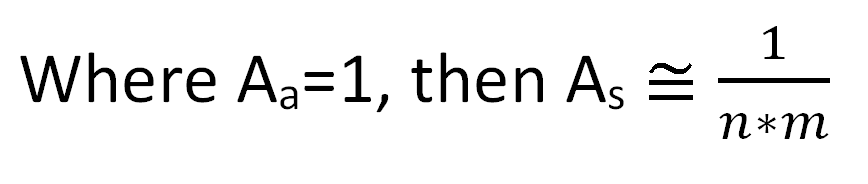
Don’t be deceived.  It is far more complicated than it looks.   Where attention to the outside world in the absence of a smart phone (Aa)equals 1, then attention to the outside world in the presence of a smartphone (As) is approximately equal to the inverse of the number of cool apps on said smartphone (n) times the I-Phone or equivalent model number (m).    Yes, approximately equal to—because nothing is that precise in the quantum mechanical world of electronics, and anyway I like using that smart looking squiggly thingy over the equal sign.   Taking the example of my own I-Phone 4, I have 14 apps I would describe as being “cool.”  As 14 x 4 is 56, then when I am packing my phone, my attention level to the outside world is an astonishingly small 1/56th of normal.  This is dangerous.  As I’m reputed to be a major space shot to begin with,  I should probably be banned from breathing and texting at the same time.   But that calculation can wait for another day, as even the basics get much more complicated.

Siri

What happens when you jump to the I-Phone 4s and add the pernicious feature known as Siri?

It gets ugly in a hurry.  The equation now looks like this:

Yikes!  We now have to square the denominator and in the personal example stated above, my attention level would be 1/562of my normally spaced out self.  This computes to 1/3136.

I don’t know if the Planck length applies to this,  but a few more apps and new models and my attention level will certainly approach it.  Also note that the “s” on the right side of the equation stands for Siri and has no numerical value.  It just makes the equation appear more complex and disguises my general ignorance of advanced mathematics. Anyway ,this demonstrates why I don’t have Siri.  If I did, I would have proposed to her long ago and been off to Vegas for a quickie divorce from my wife by now.  Ah, for the days when the internet was still in black and white.

Coming soon: The Index of Inane Celebrity Meme Virality.

post

Conjecture #2: Inevitability (Part 1)

I Conjecture:  In an infinite multiverse we must exist.

Part One: Inevitable existance

“Everything not forbidden is compulsory.”–

T.H.White, The Once and Future King

The quote above is from fiction;  in reality is anything but.  It has been echoed by Nobel physics laureate Murray Gell-Mann and effectively, if not literally, by many other scientists.  The message of the random, probabilistic nature of the sub-atomic quantum world is clear:  given enough matter, energy and 4-dimensional space time, anything that is physically possible will eventually happen.  If you roll the dice enough times, you will get every possible result.  If you add an infinite multiverse–and remember, the many worlds interpretation  of the multiverse is only one of four types of postulated multiverse–then it is conceivable that every possible set of physical laws exists somewhere.   To some, this may appear to be just a restatement of the anthropic principle, and they may be right.  Others may say that just the mere fact that we do exist makes this a moot point, and perhaps that could be construed as what I am saying.  Admittedly we are getting down to semantics and philosophy as much as science.

But to reiterate this conjecture flat out,  we exist because it is impossible for us not to.  The justification for this statement is hardly original, and the statement itself has at least been alluded to by philosophers since the ancient Greeks.  Friedrich Nietzsche expounded it as The Eternal Recurrence. It is the notion that, in a Universe that is infinite in either space or time, everything physically possible must recur ad infinitum.   If that is the case, then it follows that it is inevitable that we would exist in the first place and inevitable that we will exist again and again in our current form as well as in every every possible variation.   MIT cosmologist Max Tegmark,  who as stated in a previous post defined the four levels of “other universes” in the multiverse, has taken this concept to an almost bizarre extreme.  He has specifically calculated how far you would have to travel to find another earth with an exact copy of yourself–if and only if our local universe extends infinitely beyond the 13.7 billion light year horizon that we are able to observe.    The number makes the Douglas Adams description of the universe as “mind-bogglingly big” appear to be sub-atomically small.  It is, in light years, a 1 followed by something like a million billion billion zeroes.  I don’t even know how to post that in scientific notation on WordPress. So if our existence is inevitably going to repeat itself in an infinite universe or multiverse, does it not follow that our existence is inevitable in the first place?  No, it does not.  This does not answer the question as to why there is something in the first place, rather than nothing. In part two of this conjecture I will address this question in both scientific and philosophical terms.  And the ultimate answer regarding the impossibility of non-existence will come from the same source as my justification for the conjecture of infinity.

All text in this post ©2012 Mark Sackler

quote

“Today must be Thursday.  I could never get the hang of Thursdays.”–Douglas Adams

Please Thursday, don’t muck up my weekend.

My creative pipeline is constipated;  it will probably require a massive mental enema to flush out the next significant post.  In the meantime I’m hitting the golf course this morning.  It’s a form of self-flagellation, I know, but it beats passing kidney stones.  Wish me luck.

post

Introducing: The BLAHS

“What’s with all these awards?  They’re always giving out awards”–Woody Allen as Alvie Singer in “Annie Hall”

Golden Raspberry

The Golden Raspberry Award. Given annually to the worst films, it’s the only Hollywood award I have any respect for. This is probably because my sister Micki has been a presenter at many of their ceremonies.

Woody Allen is famous for his disdain for entertainment industry awards.  But there is, I have discovered, one media cohort that gives out even more awards than Hollywood.  You’re in it right now.  It’s the blogosphere. It seems that every third blog I visit claims to have won a blogging award.  How can this be?  It’s because just about every third blogger gives out awards.  Hell, I’ve even won one already!  And unlike Groucho Marx, I have no problem belonging to a club that has me as a member.  So without further ado, here come the BLAHS.

The BLAHS (BLog Awards Handed out by Sackler)

There are three significant things you should know about the BLAHS.  (That is, if you are interested, which is a dubious assumption on my part).

First, the term “BLAHS,” itself, is in an appropriate-for-this-blog state of superposition.  It is simultaneously singular and plural.

Second, the awards will be quasi-semi-maybe annual.  This means I will give them out whenever I damn well feel like it for whatever I feel like and too whomever I feel like.

Third, I am still working on an actual physical prize.  Trophies are nearly worthless.  I would much prefer to give out something completely worthless.  Like a years’ supply of rutabaga.  And since I don’t know anybody who actually uses rutabaga–or eats it–the  prize would be….nothing!  OK, you say you can think of uses for a rutabaga?  A doorstop? A very small lopsided bowling ball?  A shot put for a 98-pound weakling?  If you can think up 20 more uses then you have less of a life than I do and still won’t win anything.

And now–may we have the envelope and a piccolo trill, please–the winner of the first BLAHS is:

Dave Carlson of The Blog of Funny Names

Ossee SchreckengostBenedict CumberbatchOuterbridge Horsey…if you haven’t heard of these names, well, you have now!  And if you had been following The Blog of Funny Names since it’s debut last December, you would not have needed me to clue you in.  Every weekday Dave and his co-authors present another great name from history, entertainment or current events.  Special features include a weekly Funny Names in the News column.  Oh and of course, they also give out blog awards; they gave me mine.  Here is what they said about me:

Mark Sackler of Millenium Conjectures wins the Rube Waddell Ridiculousness Award. He’s a newer fan of ours who has already earned some notice. He’s an avid baseball fan and a kindred spirit who formerly kept a funny named baseball players list, and prides his blog on the “ridiculous and sublime” – also a good descriptor for Rube Waddell.

Great demented minds are equally demented.  But besides the obvious quid pro quo, there is another great reason I selected Funny Names for the first BLAHS.  It’s my favorite blog–other than my own, of course.

Endnote: if you have any suggestions for a suitable prize for the BLAHS, or a logo for that matter,  please send them to me, or post them herein.

post

Quantum Weirdness 103: How Many Worlds?

“There is no question that there is an unseen world. The problem is, how far is it from midtown and how late is it open?” –Woody Allen

For the quantum physics-uninitiated, get ready for the weirdest of the weird: the many worlds interpretation of quantum mechanics.

In Quantum Weirdness 101, we talked about the wave-particle duality of sub-atomic quanta, and how they appear to be in a superposition of every possible trajectory and location until an observer measures them.

In Quantum Weirdness 102, we discussed The Copenhagen Interpretation, which basically states that reality is just fuzzy on that level.  They are only potential trajectories–probabilities–interfering with each other, and this doesn’t have a measurable effect on our everyday macro world.   But we also visited Schrödinger’s infamous cat–the mind experiment that poked a colossal hole in  Copenhagen.

Image Credit: University of Oregon, 21st Century Science

The Copenhagen interpretation remained the most popular explanation for decades, in spite of Schrödinger.   But in 1957 cosmologist Hugh Everett made an astonishing proposal.  He suggested that the particles themselves–not merely their probabilities–interfere with one-another.  In this interpretation, they actually take every possible trajectory, each in an alternate universe.  Effectively every physically possible history exists in a huge–possibly infinite–number of alternate universes. So when we look in the box containing that possibly dead or alive cat it is actually in two universes: alive in one, dead in the other.   We just see it in the one we are in.   Taken to the extreme, every one of us would exist in a countless number of alternate universes.   Some would be imperceptibly different from ours, in others we might not even recognize ourselves or the the world around us.  And while Everett was mostly ignored or derided in his day, his many worlds interpretation has become a leading explanation of quantum weirdness, rivaling even Copenhagen.

So where do I stand?  Agnostic.  It is a rather optimistic world view.  I hope it’s true; I’m afraid it isn’t.  But many of the world’s top physicists now lean towards many worlds, and David Deutsch, among others, makes some very convincing arguments using deductive reasoning if not direct evidence.  I will leave it at this: it is a strong possibility that greatly influences my millennium conjectures. For more detailed background, check out the Wikipedia articles on The Many Worlds interpretation,  as well as general overview of quantum mechanics interpretations.   Or if you prefer, here is an entertaining video, shamelessly lifted from YouTube.