post

Cosmic Quote #44

“Creationists make it sound as if ‘theory’ is something you dreamed up after being drunk all night.”–Isaac Asimov

 “A scientific theory is a well-substantiated explanation of some aspect of the natural world that is acquired through the scientific method, and repeatedly confirmed through observation and experimentation.”–Wikipedia.
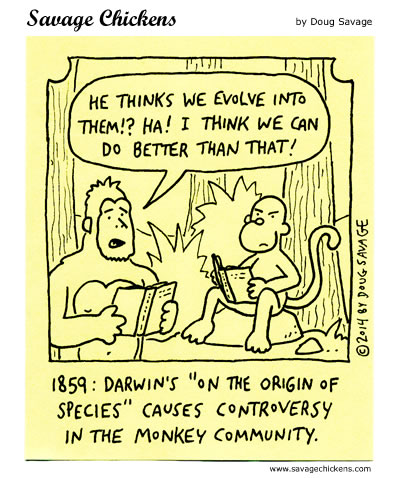
Period.

post

Cosmic Quote #40

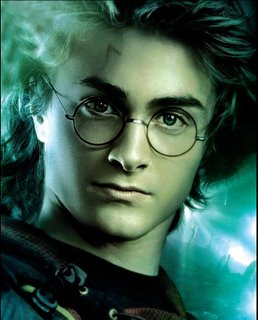
“I have a problem with religion or anything else that says ‘we have all the answers.’ We’re complex, we change our minds on issues all the time.  Religion leaves no room for human complexity.”–Daniel Radcliffe

Harry_Potter_14yrsMy head says he’s right, but my heart is broken.  I always thought Harry Potter had all the answers.  The moral of this story?  Never trust anyone with “The Mark of Zorro” on his forehead.

post

In Memoriam: Candlestick Park

“The trouble with this ball park is that they built it alongside the bay.  They should have built it under the bay.”–Roger Maris

“If I had to play here, I’d think seriously about quitting the game.”–Rocky Colovito

Candlestick in its early days.

Candlestick in its early days.

It’s no secret that Candlestick Park was not exactly loved by major league baseball players, nor by the ownership of the NFL’s San Francisco 49ers.  But as possibly it’s last professional sporting event–last night’s 49ers-Falcons Monday Night Football game–has been played, it’s still worth noting some of the memorable events and players that graced this less-than-venerable venue.

It’s notable that Willie Mays put up some of the best offensive numbers in MLB history while playing more than half of the home games in his career there.  He battled the cold driving winds–conditions that had fans donning winter coats and blankets at times, even in mid-summer.  He became an opposite field hitter to go with the prevailing winds that on one occasion were so strong they blew a pitcher off the mound.  Names like McCovey, Marichal and  Bonds (both Bobby and Barry) also donned the SF Giants logo on this field.

As for football, there is no secret that the 49ers have wanted a new field for years, wanting more capacity and more modern amenities.  But NFL fans will remember for all times the championship exploits of  the likes of Montana, Young, Rice, Lott and Clark.

So what’s my point?  Lost in all the postmortems, let’s not forget one other brief moment in history.   Candlestick Park is where Bob Watson scored baseball’s 1 millionth run,  a story which I effectively created, and recount below.

Originally posted July 8, 2012

“In the future, everyone will be famous for 15 minutes.”–Andy Warhol

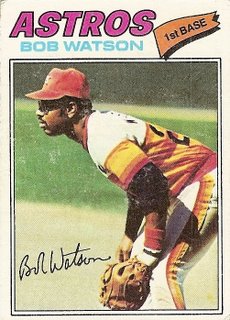
Bob Watson

The date was May 4th, 1975.  The place was Candlestick Park, San Fransisco.  And the man of the hour was Bob Watson of the Houston Astros,  who scored the 1 millionth run in major league baseball history.  Watson beat Dave Concepcion of the Cincinnati Reds by four seconds in a race around the bases from opposite ends of the country.  It was one of the most exciting early-in-the-season baseball moments ever.

To this day Watson’s name, and to a lesser extent Concepcion’s, is associated with that event in baseball history.  But there was another name in the news that was connected to the story.  He was  a 24-year-old local sportscaster from Westport, CT who used a first generation, eighty dollar electronic calculator to research and originate the millionth run contest, thus scooping all the professional statisticians and baseball journalists.  He went on a media tour to promote a “guess-the-player” contest sponsored by Tootsie Roll.  His picture and name appeared in wire service stories, in Sport Magazine and in the New York Daily News.  He appeared on television and spoke at press conferences alongside the likes of Stan Musial, Ralph Branca, Mel Allen and Bowie Kuhn.  He had 15 minutes of Warholian fame.   Then came oblivion.

The 24-year old whiz kid with the calculator was, of course, me.

I was exhilarated, excited and even euphoric;  then it was over.   And for thirty-something years the memory simply faded, almost to the point that it seemed to have happened to another person in

Millionth run center

The 1,000,000th run countdown center. That’s me talking to the gathered media as Stan Musial naps in the background. Check out my 1975 hair!

another lifetime.  It became just another forgotten footnote in the deep and illustrious history of our national pastime.  After awhile, I didn’t even care, so why should anybody else?

Then something funny happened.  Straight out the blue, nearly four years ago, I received an email from Kansas City Star sportswriter Joe Posnanski.

“Are you the Mark Sackler who originated the millionth run?” he asked.  “I’m writing a book about the 1975 Cincinnati Reds.  I want to include it and the events involving Davey Concepcion as an interesting sidebar to the season’s story.”

The next year, The Machine, Posnanski’s book chronicling a great season by one of the best teams in the game’s history, appeared in bookstores with a chapter on the millionth run.  After 34 years, somebody remembered.   My sister joked that I was getting another 15 minutes of fame.  My retort was that it was more like 30 seconds.

But then it happened again.  A few months ago, a gentleman named Timothy Gregg contacted me on Facebook to make the same inquiry.  Was I the millionth run originator?  Gregg, also a former sportscaster and sports promoter, now a digital media producer, was co-authoring the memoirs of Houston Astros TV commentator Bill Brown.  Of course, there would be a chapter on the millionth run in that book as well.  This time not from the Reds point of view, but the Astros.   This book–My Baseball Journeywas just recently published.  So fifteen minutes of fame is now fifteen minutes and forty-five seconds.   And counting…

If you are a baseball fan, both of these books are worthwhile.  Otherwise, stay tuned for more effluvia from my hopelessly cluttered cranium.

post

Cosmic Quote #32

“If god could do the tricks that we can do, he’d be a happy man!”–Peter O’Toole as film director Eli Cross in The Stunt Man

the stunt manA moment of silence, please, for my favorite actor of all time, punctuated with a quote from my favorite movie of all time.  The quote above and the image to the left provide the faintest of hints as to why this is my favorite move of all time.   I will deal with that in a future post.  For now, let’s maintain the silence.

post

Time Out: Possibilianism

“Our reality depends on what our biology is up to.”–David Eagleman

“What a life in science really teaches you is the vastness of our ignorance.”–David Eagleman

Note: Regular followers of this blog will have noted that I avoid discussions of religion and faith issues herein.  There is a reason for this:  I am not interested in discussing them.  Anyway, if you have read many of my posts you will likely have figured out where I stand on this by now.  However, I am making an exception with this post for a specific reason.  Possiblianism is to faith, what these Millennium Conjectures are to physics and metaphysics.  I am speculating on what might be the answers to unknown questions, based on what we do know about physics and cosmology–all the while keeping an open mind and not drawing any absolute conclusions.

In between theism and atheism lies a vast limbo generally referred to as agnosticism.   While the dictionary definition of agnostic is someone who believes the answer to the question of god’s existence and/or the meaning of life is unknowable, the term is often used more broadly.  The agnostic may be undecided.  The agnostic may not care and consider the question irrelevant.  Some point to such individuals and say they are just too wishy-washy to make up their minds.  The common thread among all of these, though, is that the agnostic sees no firm proof either way.  Along comes Possibilianism, which might be seen as a sort of proactive form of agnosticism.

The term Possibilianism was coined and defined by neuro-scientist and author David Eagleman, in discussion of his book, Sum: 40 Tales from the Afterlife.  When asked by an NPR interviewer whether he was a theist or atheist,  Eagleman replied that he considers himself Possiblian.   “I’m open to…ideas that we don’t have any way of testing right now,” he said.  That is a good way of explaining what my Millennium Conjectures are as well.

.

I’ve read Sum, which is a compilation of 40 possible scenarios for what happens when we die;  none of these scenarios are typical religious views of heaven or hell,

or atheist views of eternal nothingness.   Many of the scenarios seem over-the-top bizarre.  Except when you stop to think about it.  None of them are really any more preposterous than what most religions already believe.  But all of them do have rather strong moral or philosophical points to them;  they are all excellent fodder for contemplation.   At any rate, it was a best seller that received rave reviews from the likes of The Wall Street Journal, The Observer and The Los Angeles Times.  

Below is a short You Tube discussion of the concept by Eagleman.  There are much longer ones available if you have the time and inclination.  As for my ever getting to conjecture #5,  I think I’m finally done with the preliminaries, so, yes, it’s a possibility!

post

Cosmic Quote #4//Summer Rerun

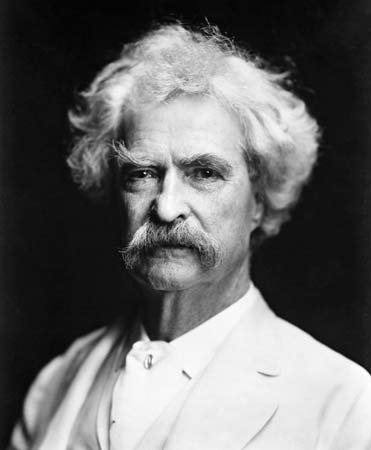
“All generalizations are false, including this one.” –Mark Twain

Mark Twain

Droll?  We would expect that from the greatest raconteur of American letters.  But perhaps this is far more subtle and profound than a mere semantic joke.  Kurt Gödel proved with his incompleteness theorems that every self-consistent mathematical system must include statements that cannot be proven–the mathematical equivalent of “this statement is false.”  But Twain takes the classic liar’s paradox and applies it, it would seem, to all of existence itself.  There are things in life and in science we just can’t determine,  and that is the point of The Millennium Conjectures.   I need to ponder explanations for what the cutting edges of physics and cosmology are telling us, whether we can test them right now or not.   But don’t misinterpret this.  One of my readers suggested that if I believe things that cannot be proven scientifically, then it is no better than philosophy or religion.  I don’t know about philosophy, but this is most certainly nothing like religion, and for two good reasons.

  • First, these are, after all, conjectures and interpretations;  things I feel strongly could be true.  I do not believe absolutely that they are true.  As I said in an earlier post, they are what-ifs.
  • Second, I stand ready to alter or drop any of these conjectures if the light of further developments requires that I do so.  By further developments I mean new scientific discoveries or better explanations by individuals I consider to be credible scientists.

I don’t know of any religion that says either of those two things–let me know if you do.

Keep the above in mind as I present further conjectures.  Quantum Weirdness 103 will precede the next one, coming soon to a computer near you.

post

Photo Op #5: Scotland!?

“Scotland is the Canada of England!”–Rainn Wilson

“There are two seasons in Scotland,  June and winter.”–Billy Connolly

So what else would I fete on the 4th of July?  Scotland, of course!  Three years ago this month we fulfilled one of the premiere items on my bucket list, by visiting Scotland for the Open Championship at the Old Course at St. Andrews.  That would be winter based on the second quote above.  Here are just a few of the memorable photographic moments.

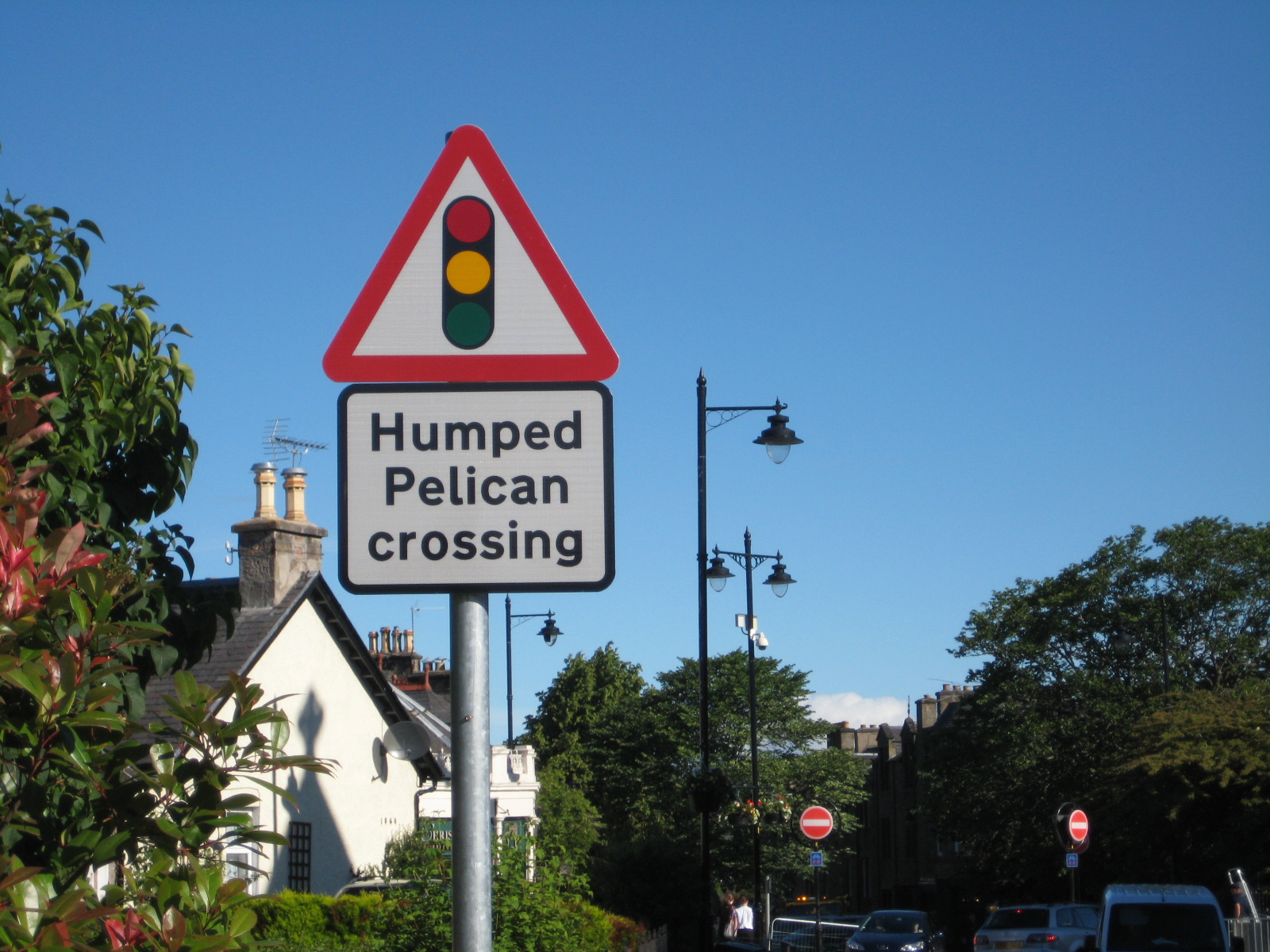
Do you have a clue? We sure didn't and had to ask at least three locals before one could explain it.  What do you think it means?  (UK natives please hush up)

What do you think this is?  We had to ask three locals before we finally got an answer.

Loch

A Scottish Loch. A typical “soft” day.

I bet it's cold under those  kilts.

I bet it was cold under those kilts.

A dramatic view from one of two farms we stayed at  in St. Andrews.

A dramatic view from one of two farms we stayed at in St. Andrews.

The Old Course's famed Swilcan Bridge.  Eat your heart out, Tom Watson

The Old Course’s famed Swilcan Bridge. Eat your heart out, Tom Watson

This July we are headed to Alaska.  I’ll be curious to see how the seasonal temperature and long daylight hours compare.  At least it should be drier.  I would call Alaska the Canada of the U.S., but I think that name is already taken.   Cheers, and happy 4th.

All photographs in this post ©2010, Mark Sackler

Signature   @MarkSackler on twitter

post

Time Out: Remembering My Dad on Father’s Day

“It doesn’t matter who my father was; it matters who I remember he was.”–Anne Sexton

Albert Allen Sackler
October 8, 1919-April 27,2012

The word serendipity usually conjures up images of inventors or scientists shouting “eureka” when they stumble upon some unexpected discovery.  But serendipity–the so-called happy accident–has its place in art and life as well. On this second father’s day without my beloved dad, here is a story of fond remembrance that might make you smile.

It was the fall of 1967 and my father had just installed some custom cabinetry in our large family den.  It was state of the art for the era: bookshelves, bar and a media center with a stereo and a color TV, the latter which he assembled himself from a Heathkit.  He was, after all, an electrical engineer.  What he never was, before or since, was an artist.  But he was about to become one for just a brief shining moment.

Overspray #1

The bar consisted of a fold down counter which revealed the spirits in the compartment behind it, and above it a cabinet with doors for glassware.  The doors had clear plexiglass window panels, which somehow did not suit my mother’s taste.  My father dutifully removed them to the basement, where he proceeded to spray paint them bright, solid colors.  He replaced the panels, and was prepared to discard the plywood square that had been the drop cloth for the paint job.   But our neighbor, physician and author Jack Shiller, just happened to stop by and call a halt to the demolition.

“Don’t throw that out!”  Dr. Shiller exclaimed

“Huh?”

“Put a frame around it!”

He did.  And he entered it in a local art show.   And it won an honorable mention prize; boy, were the judges pissed when they found out the story behind it.

Serendipity or not, I’m glad he was my dad and will love him forever.

Happy Father’s Day to all.  Be sure to hug your dad if he’s still alive.

post

Cosmic Quote #21

“What do I do in the winter when there is no baseball?  I look out the window and wait for spring.”–Rogers Hornsby

I have previously posted this picture.    This is how I feel when spring has finally sprung. (That’s not me in the picture, I have no idea who it is.  My camera timing was just perfect, and more than a bit lucky.)

Pura Vida.  A beach near Puerto Viejo, Costa Rica.January, 2008.   Copyright Mark Sackler, 2008.

Pura Vida.  Copyright Mark Sackler, 2008.

post

Conjecture #4: Quantum Consciousness

“You can’t always get what you want.  But if you try sometime, well you just might find, you get what you need.”–The Rolling Stones (Jagger/Richards)

“I’m-a get medieval on your ass.”–Marcellus Wallace (character, Pulp Fiction)

I conjecture:  In a quantum multiverse, one’s consciousness is a composite of the many worlds.


You’ve been warned folks: I’m-a get metaphysical on your asses.  What’s worse, it’s a personal, almost solipsistic metaphysics.  Hell, it’s my blog, why can’t I?  I might also add that the next couple of  conjectures will be the most controversial, and to some extent they might contradict each other.  Consider it an appropriate quantum superposition–both simultaneously half true.

Few subjects in the sciences are as controversial as the notion of quantum consciousness, as it meets at the junction of theoretical physics and cognitive psychology, and manages to merge the two phenomena that puzzle scientists the most.  Oh, we understand what quantum mechanics is in terms of what it does,  but have no freakin’ idea how and why it does it.   You can say pretty much the same for consciousness.

The concept of quantum consciousness is nothing all that new.  Without getting too technical–because hey, then I wouldn’t understand it either–the notion of a quantum mechanical basis for human consciousness was first directly proposed by Roger Penrose, in his 1989 book, The Emperor’s New Mind.  Built on his earlier work with Stuart Hammerhoff,  Penrose asserted that the human mind can perform functions that are not computable and could only arise from quantum superpositions occurring within the brain.    Max Tegmark,  an MIT cosmologist with no shortage of his own controversial ideas, became the most vocal opponent of this concept, for reasons I won’t go into here, as this is not exactly what I am advocating.     Or maybe it is.

What I am advocating, whether the mind is a quantum computer or not, is that our conscious experience represents a composite of all the universes, or potential universes suggested by quantum theory.  The distinction between potential and actual alternate universes implies the distinction between the Copenhagen and Many Worlds interpretations of quantum mechanics.  And the former seems to make more sense in concert with this conjecture, as it asserts that there simply is no objective reality on the sub-atomic level until we measure it; there are, effectively, only statistical probabilities.  From that it would be easy enough to make the philosophical assertion that our consciousness is essentially a composite of all the possibilities.

But it might not be.  As we only appear to be conscious in one reality at a time, it is certainly within the realm of feasibility to assert that consciousness is a composite in the Many Worlds scenario as well.   If the Many Worlds interpretation is willing to accept that these universes can interact with each other on the sub-atomic level to produce the wave interference pattern described in Quantum Weirdness 101,  why not accept that our consciousness does the same thing? Therefore, consciousness would be a composite across actual, physically real worlds.  David Deutsch, in his book The Fabric of Reality, makes the case that the quantum multiverse is the enabler of free will;  from this I would infer he means consciousness as well.  But the Many Worlds interpretation suggests something perhaps darker and more sinister,  even frightening.  I’m bound to get flamed to no end for even bringing it up–it will be the subject of Conjecture #5.  I call it quantum solipsism.

My bottom-line position on the composite consciousness conjecture: It’s a strong possibility.  I see evidence of it in my own life; but it would take a volume, let alone a blog post, to fully recount.  The best way to sum it up?  The Rolling Stones quote above.  It seems I rarely get exactly what I want, but often get what I need, and just in the nick of time.  What?  You say you don’t get what you need?  Well, read the next conjecture.  It seems that may not be my problem!

Below, Stuart Hammerhoff discusses the notion of quantum consciousness and related issues.