post

Timeout: 15 Minutes and 45 Seconds of Fame

“In the future, everyone will be famous for 15 minutes.”–Andy Warhol

Bob Watson

The date was May 4th, 1975.  The place was Candlestick Park, San Fransisco.  And the man of the hour was Bob Watson of the Houston Astros,  who scored the 1 millionth run in major league baseball history.  Watson beat Dave Concepcion of the Cincinnati Reds by four seconds in a race around the bases from opposite ends of the country.  It was one of the most exciting early-in-the-season baseball moments ever.

To this day Watson’s name, and to a lesser extent Concepcion’s, is associated with that event in baseball history.  But there was another name in the news that was connected to the story.  He was  a 24-year-old local sportscaster from Westport, CT who used a first generation, eighty dollar electronic calculator to research and originate the millionth run contest, thus scooping all the professional statisticians and baseball journalists.  He went on a media tour to promote a “guess-the-player” contest sponsored by Tootsie Roll.  His picture and name appeared in wire service stories, in Sport Magazine and in the New York Daily News.  He appeared on television and spoke at press conferences alongside the likes of Stan Musial, Ralph Branca, Mel Allen and Bowie Kuhn.  He had 15 minutes of Warholian fame.   Then came oblivion.

The 24-year old whiz kid with the calculator was, of course, me.

I was exhilarated, excited and even euphoric;  then it was over.   And for thirty-something years the memory simply faded, almost to the point that it seemed to have happened to another person in

Millionth run center

The 1,000,000th run countdown center. That’s me talking to the gathered media as Stan Musial naps in the background. Check out my 1975 hair!

another lifetime.  It became just another forgotten footnote in the deep and illustrious history of our national pastime.  After awhile, I didn’t even care, so why should anybody else?

Then something funny happened.  Straight out the blue, nearly four years ago, I received an email from Kansas City Star sportswriter Joe Posnanski.

“Are you the Mark Sackler who originated the millionth run?” he asked.  “I’m writing a book about the 1975 Cincinnati Reds.  I want to include it and the events involving Davey Concepcion as an interesting sidebar to the season’s story.”

The next year, The Machine, Posnanski’s book chronicling a great season by one of the best teams in the game’s history, appeared in bookstores with a chapter on the millionth run.  After 34 years, somebody remembered.   My sister joked that I was getting another 15 minutes of fame.  My retort was that it was more like 30 seconds.

But then it happened again.  A few months ago, a gentleman named Timothy Gregg contacted me on Facebook to make the same inquiry.  Was I the millionth run originator?  Gregg, also a former sportscaster and sports promoter, now a digital media producer, was co-authoring the memoirs of Houston Astros TV commentator Bill Brown.  Of course, there would be a chapter on the millionth run in that book as well.  This time not from the Reds point of view, but the Astros.   This book–My Baseball Journeywas just recently published.  So fifteen minutes of fame is now fifteen minutes and forty-five seconds.   And counting…

If you are a baseball fan, both of these books are worthwhile.  Otherwise, stay tuned for more effluvia from my hopelessly cluttered cranium.

quote

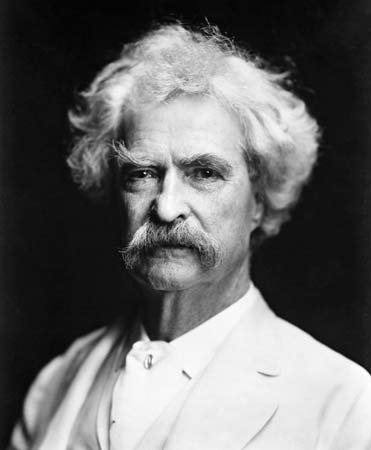
“All generalizations are false, including this one.” –Mark Twain

Mark Twain

Droll?  We would expect that from the greatest raconteur of American letters.  But perhaps this is far more subtle and profound than a mere semantic joke.  Kurt Gödel proved with his incompleteness theorems that every self-consistent mathematical system must include statements that cannot be proven–the mathematical equivalent of “this statement is false.”  But Twain takes the classic liar’s paradox and applies it, it would seem, to all of existence itself.  There are things in life and in science we just can’t determine,  and that is the point of The Millennium Conjectures.   I need to ponder explanations for what the cutting edges of physics and cosmology are telling us, whether we can test them right now or not.   But don’t misinterpret this.  One of my readers suggested that if I believe things that cannot be proven scientifically, then it is no better than philosophy or religion.  I don’t know about philosophy, but this is most certainly nothing like religion, and for two good reasons.

  • First, these are, after all, conjectures and interpretations;  things I feel strongly could be true.  I do not believe absolutely that they are true.  As I said in an earlier post, they are what-ifs.
  • Second, I stand ready to alter or drop any of these conjectures if the light of further developments requires that I do so.  By further developments I mean new scientific discoveries or better explanations by individuals I consider to be credible scientists.

I don’t know of any religion that says either of those two things–let me know if you do.

Keep the above in mind as I present further conjectures.  Quantum Weirdness 103 will precede the next one, coming soon to a computer near you.

image

…because sometimes you just need a break…

A beach near Puerto Viejo, Costa Rica.   ©2008, Mark Sackler

post

Timeout: The Sackler Laws (Part 2 1/2)

The Laws of Kid and Canine Chaos

Having kids is like having a bowling alley installed in your brain.”–Alan Bleasdale

Part B: The Equation of Kid Chaos.  As the number of kids in any household or otherwise confined environment increases, the chaos generated by said kids increases logarithmically.

As we saw in Part A of this law, The Equation of Canine Chaos, dog generated insanity increases exponentially as dog population increases.  With kids it is infinitely more complex; so we see:

Heaven help us! (even if we are not pious)

When n=1 then Ck=1, but when n>1 then Ck=10n-1

So…n is the number of kids present in a given environment, and Ck is the potential kid-generated chaos in that environment.   In plain English?  The potential chaos increases by an order of magnitude with each kid added!  In other words—for the mathematically challenged among you—two kids may be 10 times as chaotic as one; three may be 100 times as chaotic; four, 1000 times, and so on.

But the increase in analytical complexity here is far greater than the math.  For dogs, the equation is for actual chaos and is a good average.  For kids, it is only for potential chaos, and is somewhere between an approximation and a wild guess.  For one thing, the interactions between children are so complex that they quickly become incalculable.  A good metaphor for this is Newton’s laws of gravity when applied to orbital mechanics of celestial objects: the interaction between two of them is precisely calculable, but as soon as you add even one more the math becomes intractable.

This does not even bring into the equation the question of other variables, such as age, upbringing, setting and proximity to bedtime.  Setting is particularly important.  For example, put 20 nine-year-olds in a catechism class taught by an angry nun wielding a ruler, and the chaos will appear so infinitesimal even the CERN supercollider would be hard pressed to detect it.  Now put the same twenty kids in an unsupervised free swim in a public pool, and you’ll pin the needle on the Richter scale.

But wait, it gets worse!  Dog chaos is pretty obviously measured by noise and activity; but with kids that doesn’t completely tell the tale.   Even when they are quiet there is no telling what’s going on in their little crania.  Take, for example, those twenty tykes in the catechism class.  They may appear behaved now, but what they are plotting to do to that nun when class gets out makes Lord of the Flies look like a sitcom.

This brings us to the most perplexing problem of all: putting multiple kids and dogs together and attempting to calculate what will happen.  It is not unlike trying to unify relativity and quantum mechanics into a single theory of quantum gravity.   In discussing this with my cousin Marion, I asserted that she could not imagine what the equation would look like.  Her sly reply was that she could not even imagine what the room would look like!  Not being one to back off from a challenge, I found this image which fairly represents what both the resulting math and the domicile will look like.

The Equation of Combined Kid AND Canine Chaos


With that,  have a great holiday week and brace yourself for more.

post

Conjecture #1: Infinity (Part 3)

I Conjecture:  The Concept of Infinity Could not Exist in a Finite Universe.

Part Three: Human Imagination

“Two things are infinite: the universe and human stupidity; and I’m not sure about the universe.”
Albert Einstein

It is certainly understandable how somebody as brilliant as Einstein could perceive the rest of us to be infinitely stupid.  Jokes about lawyers and politicians aside, I’m not sure about either.  I remain an agnostic on untestable scientific conjectures,  as well as on religion.  But my gut continues to tell me that my conjecture of infinity has merit, so I’ll proffer one final discussion before moving on to the next one.

Nothing is inherently more self-contradictory than infinity.  We can imagine it mathematically, but can’t measure it.  We can imagine–sort of–infinite time and space.  But physicists and philosophers tell us there are a finite number of possible combinations of matter and energy, at least in our observable universe with our laws of physics.  But we can imagine things beyond those laws (fantasies like Harry Potter, various science fiction scenarios,  and possibly real alternate universes with different laws of physics, to name just a few).  So our imagination does not seem to be limited by what is possible or observable in nature.  By that it would be reasonable to assume that human creativity and human stupidity are both potentially infinite.**

One of my favorite quotes about the universe is the famous J.B.S. Haldane proposition, “I suppose the universe is not only queerer (sic) then we imagine, it is queerer than we can imagine.”  This would seem to be a contradiction of the notion that human imagination is infinite.  David Deutsch says as much in The Beginning of Infinity, and he says so specifically in regard to this quote.  His point is that human imagination and creativity are potentially infinite and that Haldane is, therefore, wrong.  But where infinity is concerned, even Deutsch contradicts himself.  For as he points out elsewhere in the book,  there are mutually exclusive infinities and there are also larger and smaller infinities.  Consider the set of all even integers and the set of all odd integers.  They are mutually exclusive yet both infinite.  Now consider the set of all even integers and the set of all integers.  They are both infinite, yet the latter is twice as large as the former.  The point is: there might be both an infinity of things we can imagine, and an infinity of things we can’t imagine.   Deutsch himself indirectly alludes to this in his earlier book, The Fabric of Reality.

There is no question that the Haldane quote was true at least in the early part of the 20th century when he first espoused it.   The universe certainly turned out to be stranger than anyone could imagine at that time.  But the universe continues to surprise us, no matter what we imagine.  And if our imagination is only potentially infinite we cannot imagine, at any one time, everything that exists or the larger infinity that might exist.   To me, this is what makes the combination of human imagination with empirical knowledge so exciting.  No matter what we can test or what we can imagine, there are still surprises out there to delight and confound us.  But in my final analysis–the one that needs explanations and not just measurement–Einstein was absolutely right in another of his famous quotes:

“Imagination is more important than knowledge.”

Up next (after a few digressions and ridiculous timeouts): The conjecture of inevitability

**By potentially unlimited here, I mean no theoretical limit.  To be actually infinite, humanity would have to exist forever.

quote

“Magnetism is one of the six fundamental forces in nature, the other five being gravity, duct tape, whining, remote control and the force that pulls dogs towards the groins of strangers.”–Dave Barry


Down boy!

I can certainly agree with the first three.  I think there is also an absolute force which draws my daughter towards her mother’s credit cards, and everything else is relative.


post

Quantum Weirdness 102: Equal Time for the Cat

“I don’t like it, and I’m sorry I ever had anything to do with it.”
Erwin Schrödinger  (referring to Quantum Mechanics).

What better follow up to The Equation of Canine Chaos, then the infamous tale of Schrodinger’s Cat?

In Quantum Weirdness 101, we saw that the double-slit experiment revealed the wave-particle duality of sub-atomic quanta, and the fact that these troublesome little bits behave as if they are everywhere they could possibly be at once until an observer looks for them.  While the experimental proof that this happens is rock-solid, the explanation for what causes it is anything but.  For decades after its original discovery in the 1920’s, the predominant interpretation—essentially, in fact, the only one—was the so-called Copenhagen Interpretation.  It essentially states that the universe is just fuzzy on the sub-atomic level, it doesn’t affect our everyday macro-world, and we mortals should not worry about it otherwise.  Critics have said it is really no interpretation, and some facetiously call it the “shut-up-and-calculate” interpretation.   In 1935, Erwin Schrodinger posed perhaps the most famous mind experiment in all of physics to show that theoretically the Copenhagen Interpretation makes no sense.  More recently, physicists have been able to succeed in creating this quantum superposition with larger and larger bits of matter, which tends to shoot empirical holes in Copenhagen.

Anyway, this witty video does a good job of explaining the concept behind Schrodinger’s Cat.  And I’m pretty sure that no cats were harmed in its making—much to the chagrin of my dogs.

In the next installment: the many worlds interpretation of quantum weirdness.

post

Timeout: The Sackler Laws (Part 2)

The Laws of Kid and Canine Chaos

“Chaos is inherent in all compounded things.” –Buddha

Part A, the equation of canine chaos: As the number of dogs in any household, or otherwise confined environment increases, the chaos generated by said dogs increases exponentially.

The math on this one is easy and so is the logic. Let’s start with an easy equation:

Cd=D2

Simply stated, where Cd equals canine chaos and D equals the number of dogs present, then canine chaos equals the number dogs present squared. So two dogs equals four times the chaos, three dogs equals nine times the chaos, four dogs 16 times, and so on.

As for the logic, that’s also easy. Assuming that dogs are a pack animal, then each chaotic activity started by one, will be joined in by the others. This includes, but is not limited to, barking, fighting, knocking over the trash, attacking the mailman, biting Aunt Millie, pooping in the hallway, stealing your lunch and whatever other crazy things canines do. So, if there are two dogs, it will happen twice as often and be twice as chaotic each time. If there are three dogs, it will happen three times as often and be three times as chaotic. You get the idea.

Disclaimer: this equation is an average. Obviously, geriatric dogs will create less chaos and puppies are off the chart crazy. The breed of dog is a factor as well. (See figure X, schipperkes, and figure Y—as in “why?”—labs)

Figure X. Schipperke [Pronunciation: skip-it; origin: Dutch, meaning little s&$^%#–er, I mean, “little captain”] Noun: 1. a furry black dog of Belgian origin 2. trouble waiting to happen

Figure Y. As in, “why do people keep these things?” (attribution of photo unknown)

Take for example, our own pack of three (if you can believe that) schipperkes. They have the uncanny knack of lulling us into complete complacency. Then a chipmunk runs across the lawn and our former state of quietude is instantly transformed into the canine equivalent of One Flew Over the Cuckoos Nest. I’m sure insanity is zoonotic. You get it from your pets.

We also need to consider that there are limits to the human capability to distinguish between degrees of canine chaos. At some point, the saturation point is reached, and the perceived chaos is effectively infinite. Beyond this, addition of more dogs to the environment cannot inflict any measurably higher degree of pain. These limits may vary with the individual. I, for instance, have lived with multiple dogs for years and therefor have a higher threshold of tolerance than the average person. On the other hand, my wife is a veterinarian and is effectively immune. Our dogs could stage World War III on top of her head in the middle of the night, and she would sleep through it. [NOTE: Part B, the Law of Kid Chaos, coming soon in a future post.]

Text in the post ©2012 Mark Sackler

post

Conjecture #1: Infinity (Part Two)

I conjecture:  The concept of infinity could not exist in a finite universe.

Part Two:  The Possibility of Infinite Space

“The universe is a big place, perhaps the biggest.”– Kurt Vonnegut

Douglas Adams called the universe “mind-bogglingly big.”  But “mind-bogglingly big” pales next to infinitely big.  And while the question of space being infinite may be somewhat easier to get around than time, it is certainly no bargain.

The first problem is that Vonnegut is dead-on right.  Our universe is only possibly the biggest place.  It used to be that “universe” meant everything.  But then the concept of “multi-verse,” with countless alternate or parallel universes, began to creep into astrophysics and cosmology.  To make matters worse, there is not just one potential level of parallel universe proposed, but four.*  So far.  Physicist and author Paul Davies argues that the concepts, while fascinating to contemplate, amount to philosophy–or even religious faith–if you can’t test them.   David Deutsch, among others, disagrees and deduces that the many worlds interpretation of quantum mechanics is the only one that makes sense, in terms of scientific explanation.  I’ll have more background on the various arguments surrounding interpretations of quantum mechanics–particularly The Copenhagen Interpretation vs. all others–in future posts.

Getting back to the question of infinity of our universe and/or the multiverse, there is indeed some scientific investigation aimed at determining the potential infinity of our own visible universe.  It involves the topology of its three-dimensional space and whether it is flat or curved.   I can’t go into details, as it involves rather advanced calculations from observations of the Cosmic Background Radiation–the earliest remnants of the Big Bang we are able to detect with current technology.  But the weight of the existing evidence seems to be pointing towards a flat topology that could be infinite.  Add that to the possibility of countless alternate universes of various kinds,   and I will assume for our purposes that space is at least potentially infinite.  [For a discussion of actual vs. potential infinity, see the Wikipedia article].   In the final installment on this conjecture, I will address one dimension of existence that I feel without doubt is potentially infinite: human imagination.    For an extended, if somewhat dramatic discussion of the possibility of an infinite universe, watch the video linked at the bottom of this article.

7-year universe image of background microwave radiation from NASA’s WMAP probe. (2010)

*As classified by MIT cosmologist, Max Tegmark

Text of this post ©2012 Mark Sackler.

post

Remembering My Dad

Remembering My Dad

Albert Allen Sackler
October 8, 1919-April 27,2012

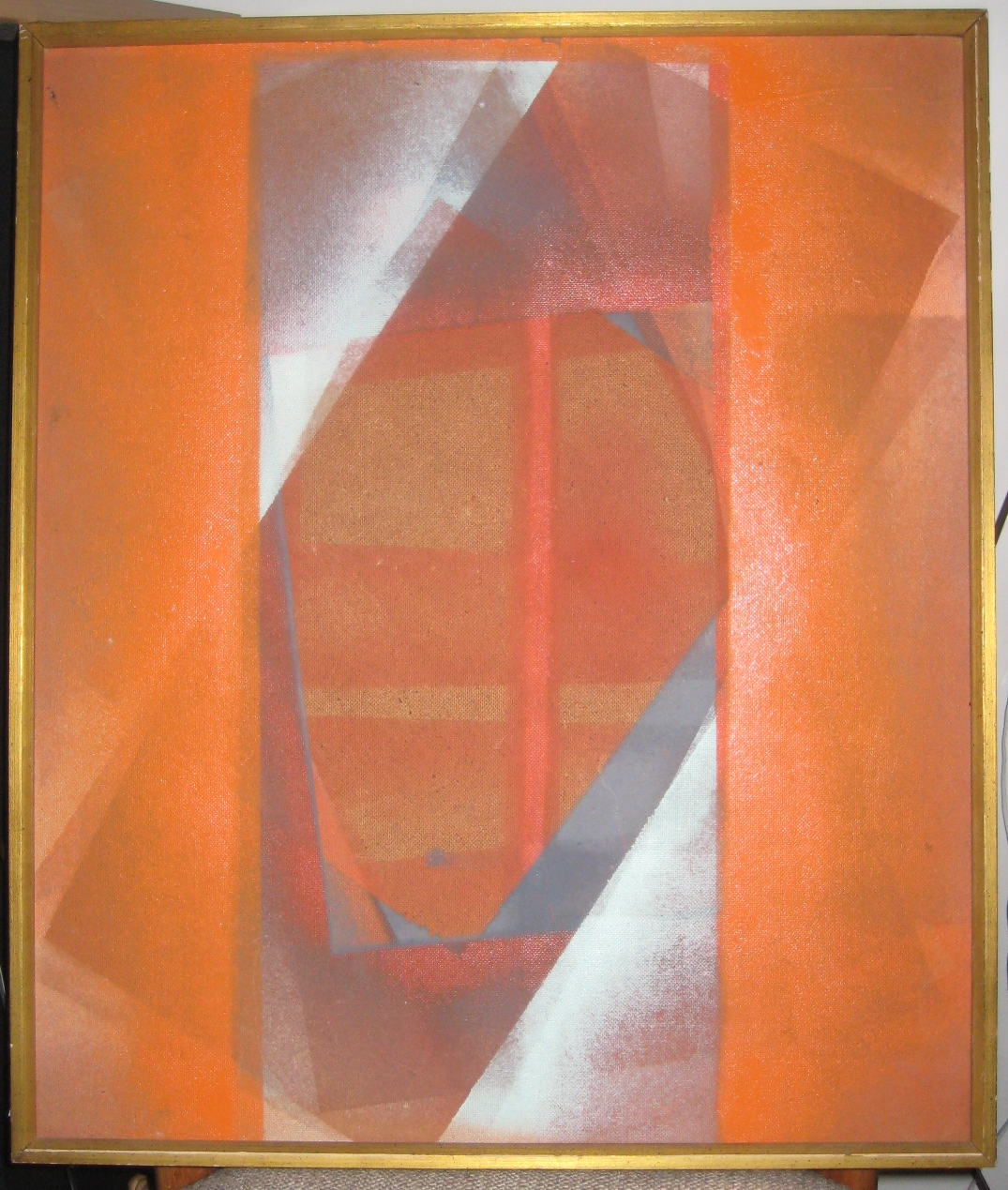
The word serendipity usually conjures up images of inventors or scientists shouting “eureka” when they stumble upon some unexpected discovery.  But serendipity–the so-called happy accident–has its place in art and life as well. On this first father’s day without my beloved dad, here is a story of fond remembrance that might make you smile.

It was the fall of 1967 and my father had just installed some custom cabinetry in our large family den.  It was state of the art for the era: bookshelves, bar and a media center with a stereo and a color TV, the latter which he assembled himself from a Heathkit.  He was, after all, an electrical engineer.  What he never was, before or since, was an artist.  But he was about to become one for just a brief shining moment.

Overspray #1

The bar consisted of a fold down counter which revealed the spirits in the compartment behind it, and above it a cabinet with doors for glassware.  The doors had clear plexiglass window panels, which somehow did not suit my mother’s taste.  My father dutifully removed them to the basement, where he proceeded to spray paint them bright, solid colors.  He replaced the panels, and was prepared to discard the plywood square that had been the drop cloth for the paint job.   But our neighbor, physician and author Jack Shiller, just happened to stop by and call a halt to the demolition.

“Don’t throw that out!”  Dr. Shiller exclaimed

“Huh?”

“Put a frame around it!”

He did.  And he entered it in a local art show.   And it won an honorable mention prize; boy, were the judges pissed when they found out the story behind it.

Serendipity or not, I’m glad he was my dad and will love him forever.

Happy Father’s Day to all.