quote

“Women marry men hoping they will change. Men marry women hoping they will not. So each is inevitably disappointed.”– Albert Einstein
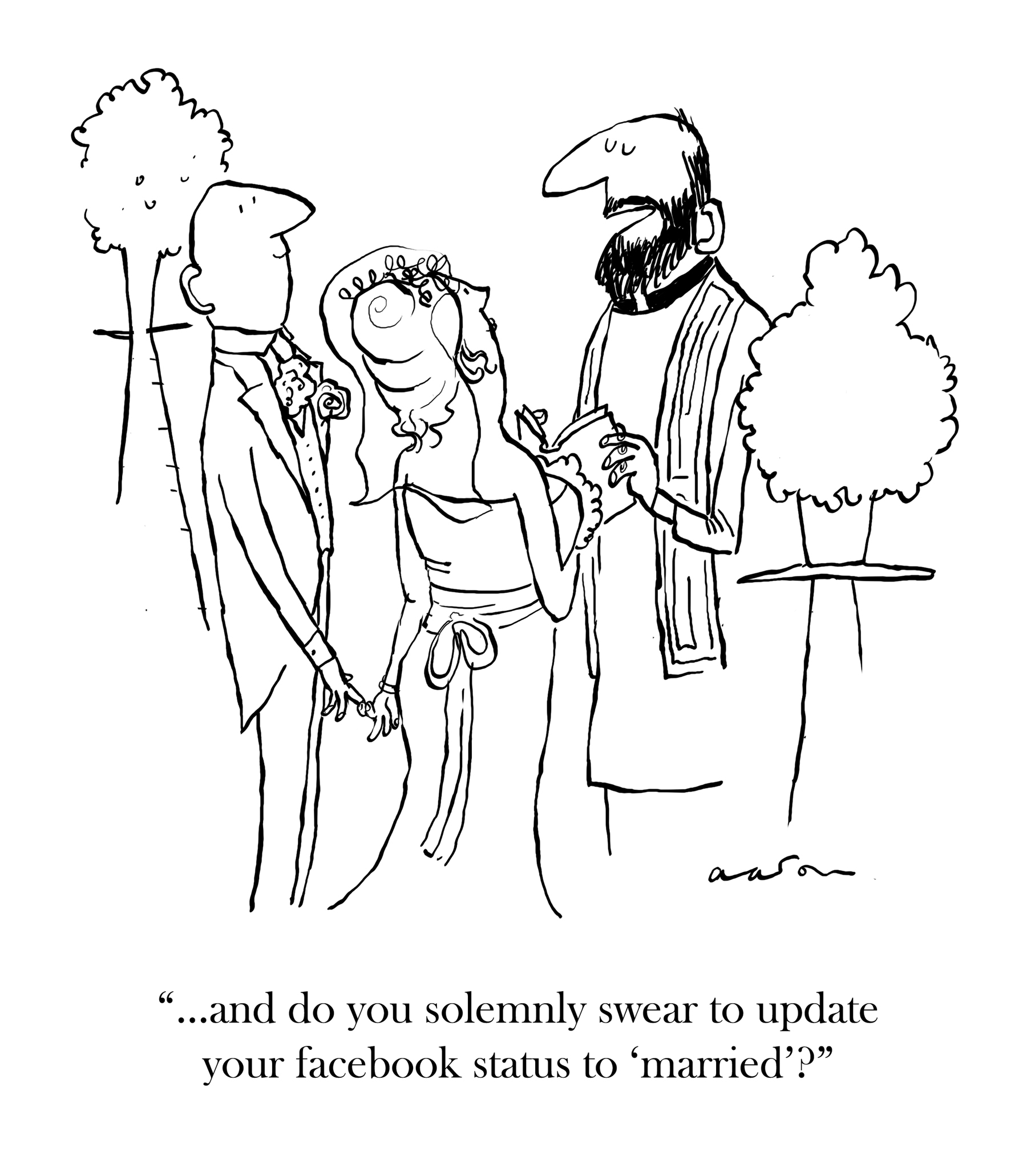
Copyright cartoonstock.com. Used by permission.

Hmmm.  Ol’ Albert may have known more about everyday life then he is commonly given credit for.  After 34-years, my wife still hasn’t learned this lesson.  She is still trying to change me.  I keep telling her to leave me alone as I am a finished product;  I couldn’t possibly get any worse.

quote

“A child of five would understand this. Send someone to fetch a child of five.”-Groucho Marx

Now if I could only find a child of five to write my next post, I could get out of here for the weekend.

Forever five years old


post

Quantum Weirdness 103: How Many Worlds?

“There is no question that there is an unseen world. The problem is, how far is it from midtown and how late is it open?” –Woody Allen

For the quantum physics-uninitiated, get ready for the weirdest of the weird: the many worlds interpretation of quantum mechanics.

In Quantum Weirdness 101, we talked about the wave-particle duality of sub-atomic quanta, and how they appear to be in a superposition of every possible trajectory and location until an observer measures them.

In Quantum Weirdness 102, we discussed The Copenhagen Interpretation, which basically states that reality is just fuzzy on that level.  They are only potential trajectories–probabilities–interfering with each other, and this doesn’t have a measurable effect on our everyday macro world.   But we also visited Schrödinger’s infamous cat–the mind experiment that poked a colossal hole in  Copenhagen.

Image Credit: University of Oregon, 21st Century Science

The Copenhagen interpretation remained the most popular explanation for decades, in spite of Schrödinger.   But in 1957 cosmologist Hugh Everett made an astonishing proposal.  He suggested that the particles themselves–not merely their probabilities–interfere with one-another.  In this interpretation, they actually take every possible trajectory, each in an alternate universe.  Effectively every physically possible history exists in a huge–possibly infinite–number of alternate universes. So when we look in the box containing that possibly dead or alive cat it is actually in two universes: alive in one, dead in the other.   We just see it in the one we are in.   Taken to the extreme, every one of us would exist in a countless number of alternate universes.   Some would be imperceptibly different from ours, in others we might not even recognize ourselves or the the world around us.  And while Everett was mostly ignored or derided in his day, his many worlds interpretation has become a leading explanation of quantum weirdness, rivaling even Copenhagen.

So where do I stand?  Agnostic.  It is a rather optimistic world view.  I hope it’s true; I’m afraid it isn’t.  But many of the world’s top physicists now lean towards many worlds, and David Deutsch, among others, makes some very convincing arguments using deductive reasoning if not direct evidence.  I will leave it at this: it is a strong possibility that greatly influences my millennium conjectures. For more detailed background, check out the Wikipedia articles on The Many Worlds interpretation,  as well as general overview of quantum mechanics interpretations.   Or if you prefer, here is an entertaining video, shamelessly lifted from YouTube.

post

Timeout: 15 Minutes and 45 Seconds of Fame

“In the future, everyone will be famous for 15 minutes.”–Andy Warhol

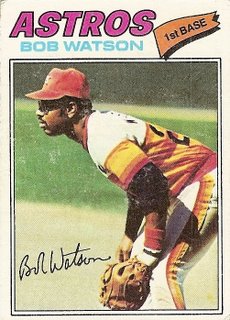
Bob Watson

The date was May 4th, 1975.  The place was Candlestick Park, San Fransisco.  And the man of the hour was Bob Watson of the Houston Astros,  who scored the 1 millionth run in major league baseball history.  Watson beat Dave Concepcion of the Cincinnati Reds by four seconds in a race around the bases from opposite ends of the country.  It was one of the most exciting early-in-the-season baseball moments ever.

To this day Watson’s name, and to a lesser extent Concepcion’s, is associated with that event in baseball history.  But there was another name in the news that was connected to the story.  He was  a 24-year-old local sportscaster from Westport, CT who used a first generation, eighty dollar electronic calculator to research and originate the millionth run contest, thus scooping all the professional statisticians and baseball journalists.  He went on a media tour to promote a “guess-the-player” contest sponsored by Tootsie Roll.  His picture and name appeared in wire service stories, in Sport Magazine and in the New York Daily News.  He appeared on television and spoke at press conferences alongside the likes of Stan Musial, Ralph Branca, Mel Allen and Bowie Kuhn.  He had 15 minutes of Warholian fame.   Then came oblivion.

The 24-year old whiz kid with the calculator was, of course, me.

I was exhilarated, excited and even euphoric;  then it was over.   And for thirty-something years the memory simply faded, almost to the point that it seemed to have happened to another person in

Millionth run center

The 1,000,000th run countdown center. That’s me talking to the gathered media as Stan Musial naps in the background. Check out my 1975 hair!

another lifetime.  It became just another forgotten footnote in the deep and illustrious history of our national pastime.  After awhile, I didn’t even care, so why should anybody else?

Then something funny happened.  Straight out the blue, nearly four years ago, I received an email from Kansas City Star sportswriter Joe Posnanski.

“Are you the Mark Sackler who originated the millionth run?” he asked.  “I’m writing a book about the 1975 Cincinnati Reds.  I want to include it and the events involving Davey Concepcion as an interesting sidebar to the season’s story.”

The next year, The Machine, Posnanski’s book chronicling a great season by one of the best teams in the game’s history, appeared in bookstores with a chapter on the millionth run.  After 34 years, somebody remembered.   My sister joked that I was getting another 15 minutes of fame.  My retort was that it was more like 30 seconds.

But then it happened again.  A few months ago, a gentleman named Timothy Gregg contacted me on Facebook to make the same inquiry.  Was I the millionth run originator?  Gregg, also a former sportscaster and sports promoter, now a digital media producer, was co-authoring the memoirs of Houston Astros TV commentator Bill Brown.  Of course, there would be a chapter on the millionth run in that book as well.  This time not from the Reds point of view, but the Astros.   This book–My Baseball Journeywas just recently published.  So fifteen minutes of fame is now fifteen minutes and forty-five seconds.   And counting…

If you are a baseball fan, both of these books are worthwhile.  Otherwise, stay tuned for more effluvia from my hopelessly cluttered cranium.

post

Quantum Weirdness 102: Equal Time for the Cat

“I don’t like it, and I’m sorry I ever had anything to do with it.”
Erwin Schrödinger  (referring to Quantum Mechanics).

What better follow up to The Equation of Canine Chaos, then the infamous tale of Schrodinger’s Cat?

In Quantum Weirdness 101, we saw that the double-slit experiment revealed the wave-particle duality of sub-atomic quanta, and the fact that these troublesome little bits behave as if they are everywhere they could possibly be at once until an observer looks for them.  While the experimental proof that this happens is rock-solid, the explanation for what causes it is anything but.  For decades after its original discovery in the 1920’s, the predominant interpretation—essentially, in fact, the only one—was the so-called Copenhagen Interpretation.  It essentially states that the universe is just fuzzy on the sub-atomic level, it doesn’t affect our everyday macro-world, and we mortals should not worry about it otherwise.  Critics have said it is really no interpretation, and some facetiously call it the “shut-up-and-calculate” interpretation.   In 1935, Erwin Schrodinger posed perhaps the most famous mind experiment in all of physics to show that theoretically the Copenhagen Interpretation makes no sense.  More recently, physicists have been able to succeed in creating this quantum superposition with larger and larger bits of matter, which tends to shoot empirical holes in Copenhagen.

Anyway, this witty video does a good job of explaining the concept behind Schrodinger’s Cat.  And I’m pretty sure that no cats were harmed in its making—much to the chagrin of my dogs.

In the next installment: the many worlds interpretation of quantum weirdness.

video

Quantum Weirdness 101:  The Double-Slit Experiment

“Anyone who is not shocked by quantum theory has not understood it.”–

Neils Bohr

With apologies to Douglas Adams–don’t panic!  Although an understanding of a few basic concepts of quantum mechanics will be helpful in following some of the Millennium Conjectures, it’s actually not that hard to grasp.  No math is needed.  The following video gives a clear and entertaining description of the wave-particle duality of the sub-atomic world.   If you weren’t already familiar with the concept, this should give you what you need to “get it.”   What it won’t allow you to do is come to grips with it, or even believe it.  But you’d better believe it.  Quantum theory is one of the most rock solid, experimentally verified fields in all of science.   And whether you believe it or not, don’t even think of explaining it.  The world’s most brilliant physicists have been debating the implications for decades and are nowhere near a consensus.   If you’d like a little more after the video, including a description of some of the leading explanations, here is a text primer.


quote

“There is a theory which states that if ever anyone discovers exactly what the Universe is for and why it is here, it will instantly disappear and be replaced by something even more bizarre and inexplicable.

There is another theory which states that this has already happened.”

–Douglas Adams, The Restaurant at the End of the Universe

post

What is this?

These are my musings, both ridiculous and sublime.  I would have made “Ridiculous and Sublime” the primary title of this blog, but I am vain.  I want some semblance of uniqueness and there are many other bloggers using this theme.   But I will explain both title and subtitle before proceeding.

So what are Millennium Conjectures?  I’ll explain that in a bit as well.  But first, I present a word about the overall content and nature of my posts.  And why I, and my posts, are both ridiculous and sublime.

This is not a personal journal.  Who would be interested in reading my personal journal online?  I wouldn’t even be interested.  No, these are musings, observations and conjectures from a journalistic standpoint, a way of looking at things you might find interesting or funny.  You might also find some silly and trivial.  I do have some past background in both broadcast and print journalism, but that is not my professional livelihood these days; I do this for the satisfaction and outlet.

So—I’ll get back to the subtitle.

Let’s face it: I am both ridiculous and sublime.  To start with, the two most famous people whose birthday I share (October 2) are Mohandas Gandhi and Groucho Marx.

Gandhi

What could be more sublime and ridiculous than those two?  And to boot, the most famous thing, arguably, that happened on the very day of my birth (Oct 2, 1950), was the appearance of the very first syndicated Peanuts cartoon.  Good ‘ol Charlie Brown was born the same day as me.  He is most certainly a perfect blending of the two qualities we are talking about.  Wishy-washy? Maybe. But that is only because he is so torn by these conflicting aspects of the universe that surrounds him.  Yes, the silly and profound seem both to be bound into my DNA.

Content herein will then consist of both the trivial/silly (WheresGeorge.com, history of CT license plates, Pearls Before Swine) and the profound (Quantum Physics, Cosmology, Existentialism, Opera and the philosophy of science).  There will also be topics that engender a bit of both characteristics; baseball, for example, and especially baseball statistics.  Yes, Baseball is a game, but as George Will so astutely observed, “if baseball is just a game, then the Grand Canyon is just a hole in the ground.”   This will happen solely because my cluttered mind embraces all of these endeavors, and for some strange reason, I think that somewhere out there one or two people might be interested in my insights.

So, back to the Millenium Conjectures.  My posts will be marked as either Ridiculous or Sublime or Ridiculous AND Sublime.  The lion’s share of the Sublime category—indeed of all the content– will be a series I call The Millenium Conjectures.  These will deal with my views and speculations on the nature of reality, the universe and  scientific philosophy.  Everything else will be a time-out to blow off steam. But lest my head explode, let alone yours, this is enough for now.                                                   Text in this post ©2012 Mark Sackler